20 September 2016

Greater and Lesser Sand Plovers – Jubail

The last few weeks have seen numbers of both Lesser Sand Plover and Greater Sand Plover building in the Jubail area. The Lesser Sand Plover Charadrius altifrons is a winter visitor and passage migrant that is common along the coast from August through May with very small numbers of non-breeding immatures in June and July. It is very rare away from the littoral with larger numbers on passage from late July to September and more especially in March and April showing characteristics of altifrons. The Greater Sand Plover Charadrius leschenaultii is a passage migrant and winter visitor: Regular arrival of juveniles in late June and July where they remain common until September both on the coast and inland. From October they become scarce away from the coast but become regular again in April and May suggesting birds are on passage.
Lesser Sand Plover
Lesser Sand Plover
Lesser Sand Plover
Lesser Sand Plover
Lesser Sand Plover
Lesser Sand Plover
Greater Sand Plover
Greater Sand Plover

19 September 2016

First breeding record of Greater Flamingo for Saudi Arabia – Jubail

In summer this year Phil Roberts and I found the first confirmed breeding record of Greater Flamingo for Saudi Arabia. We saw up to 30 adults and two very young juveniles (unable to fly) near Jubail. Birds have been around all summer with unto 4000 in April and several hundreds during the entire summer. We did not see any nest mounds although there are a number of structures that may be nests out on the sabkha. The juveniles are too small to fly so must have been born at SAF. The record was sent to Mike Jennings who confirmed it as the first breeding record for the Kingdom but mentioned nest building had been seen in a nearby area previously but no confirmed breeding.
Breeding Greater Flamingo

Breeding Greater Flamingo

Breeding Greater Flamingo

18 September 2016

Decreasing numbers of Egyptian Nightjars – Jubail

The number of Egyptian Nightjars have decreased from the high of 15 birds to five as has been the case in previous years. The birds tend to disappear entirely from early September. White-cheeked Terns have decreased in numbers even more rapidly from more than four thousand to several hundred now. One the other hand wader numbers are increasing with small numbers of Curlew Sandpipers, Ruff and Ruddy Turnstones appearing. White-winged Terns are also showing in small numbers with up to seven seen together on a small flooded area of sabkha.
Egyptian Nightjar
Egyptian Nightjar
Curlew Sandpiper
Curlew Sandpiper
Ruddy Turnstone
Ruddy Turnstone
Ruff
Ruff
White-winged Tern
White-winged Tern

17 September 2016

Fairy Mantis – Tanoumah

There are a number of different mantis species in Saudi Arabia and when I was birdwatching in Tanoumah with Phil Roberts we found a different type that we had not seen before. After help from Mansur Al Fahad and looking on the internet it became obvious the species was a Fairy Mantis Oxyothepis nilotica. It was not easy to photograph with the below photos the only good one I got.
Fairy Mantis Oxyothepis nilotica

Fairy Mantis Oxyothepis nilotica

Fairy Mantis Oxyothepis nilotica

16 September 2016

Temminck’s Stint and more – Jubail

In early September I saw a nice Temminck’s Stint along a wet ditch in Jubail. Unfortunately it was not very photogenic and the below poor photo is the only one I managed. The species is a passage migrant and winter visitor that is a regular migrant in small numbers almost always away from the coast. It occurs in April and May and again from September to November. Some birds do winter in very small numbers at some suitable inland sites such as Sabkhat Al Fasl near Jubail.
Temminck’s Stint

15 September 2016

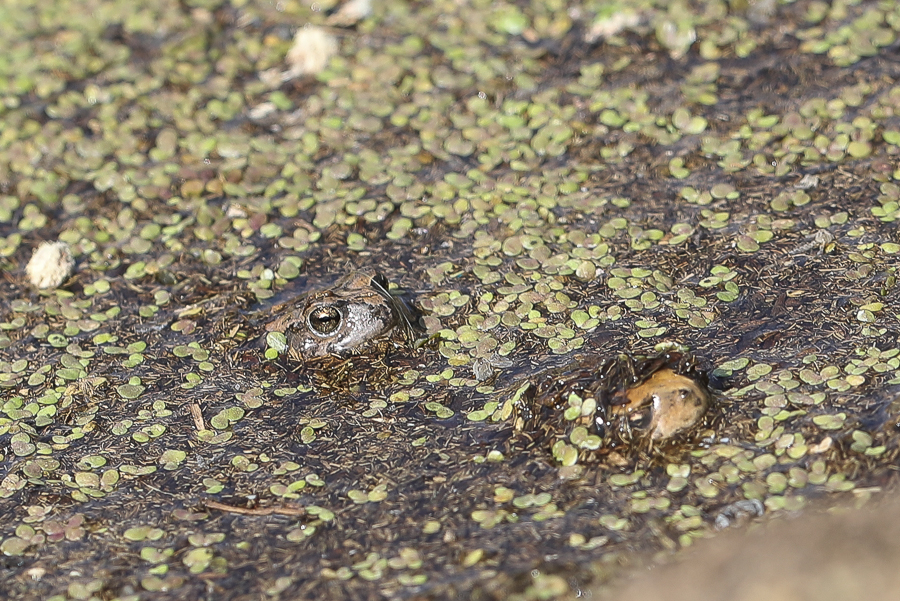
Arabian Skittering Frog – Talea’a Valley

Whilst birdwatching the Talea’a Valley we found a large pool of water with several Arabian Skittering Frogs. This is only the second time I have seen this frog in Saudi Arabia. The Arabian Skittering Frog or Arabian Five-fingered Frog Euphlyctis ehrenbergii a species of frog in the Dicroglossidae family found in Saudi Arabia and Yemen. It has previoulsy been treated as a subspecies of the Skittering Frog Euphlyctis cyanophlyctis, but is now considered as a valid species. The frog is restricted to areas of permanent and temporary water in the Red Sea coastal region of Yemen and Saudi Arabia. An aquatic species, it can also be present in irrigated area where it is extremely common or abundant. It has an altitudinal range from sea level to 2,400 metres above sea level and lays its eggs in water. The species may aestivate during the dry season, meaning it spends the hot or dry period in a prolonged state of torpor or dormancy.


14 September 2016

Gambaga Flycathcer - Tanoumah

Whilst birdwatching at Tanoumah in southwest Saudi Arabia, in the Asir mountains we saw plenty of Gambaga flycatchers. We were there in the summer and a number of juvenile birds were seen being fed by their parents. Juveniles are very spotted and are not depicted in the field guide to the region but were easily identified as they were being fed by adults. The species is a locally common breeding resident of the Hejaz and Asir mountains and prefers bushy areas particularly acacia scrub. It is restricted to the southwest of the Kingdom, but is easily seen on every visit, as well as Africa.


13 September 2016

Eastern Bordered Straw - Record by Mansur Al Fahad

Mansur has recently sent me a few moths he has caught near Riyadh and managed to identify. One such moth was Heliothis nubigera. The english name for this is the Eastern Bordered Straw a species of moth of the Noctuidae family. It is found in all kind of arid areas in the Palaearctic. The wingspan is 35–40 mm with adults on wing year round. There are probably two generations per year.
Eastern Bordered Straw

12 September 2016

World Shorebirds Day – Dammam Wader Roost

The World Shorebirds Day was created with the following aims:
To raise public awareness about the need to protect shorebirds and their habitats throughout their life cycles;
To raise public awareness about the need for ongoing shorebird research;
To connect people with shorebirds through important shorebird sites around the world;
To get shorebird enthusiasts to introduce shorebirds to more birdwatchers;
To raise awareness about the need for increased funding for shorebird research, monitoring and conservation.

World Shorebirds Day is held every year on the 6th of September or the weekend closest to this date. All waders are counted and sent in for collating with hundreds of different sites in different countries being counted on the same day. Phil Roberts and I count the waders along the Dammam seafront near to the Dammam Wader Roost where a reasonable number of waders can be counted. This year the commonest wader was Dunlin with good numbers of Bar-tailed Godwits and Lesser Sand Plovers also seen. The largest flock of Ruddy Turnstones I have seen in the Eastern Province was counted with 45 birds present. Waders counted in single figures included Ruff, Black-winged Stilt, Kentish Plover and Pied Avocet and unusual bird for this area although commoner in Jubail to the north.
Dunlin
Dunlin
Bar-tailed Godwit
Bar-tailed Godwit
Lesser Sand Plover
Lesser Sand Plover
Pied Avocet
Pied Avocet
Ruddy Turnstone
Ruddy Turnstone
Ruff
Ruff

11 September 2016

Yemen Thrush - Tanoumah

Whilst birding the Tanoumah area in summer 2016 I saw a good number of Yemen Thrushes Turdus menachensis including a pair of adults feeding a very young juvenile on the ground. I am not certain if the bird could fly as it was very young but the parents were in close attendance and hopefully it made it to adulthood. The Yemen Thrush is endemic to the southwest Arabia and in Saudi Arabia occurs in the highlands of the Asir mountains where it is a locally common breeding resident in Juniper, especially the Jebel Soudah area. It is mainly seen between 2000 – 3000 metres.
Yemen Thrush

Yemen Thrush

Yemen Thrush

Yemen Thrush

Yemen Thrush