Showing posts with label Streaked Scrub Warbler. Show all posts

08 June 2023

Common Birds – Tanoumah

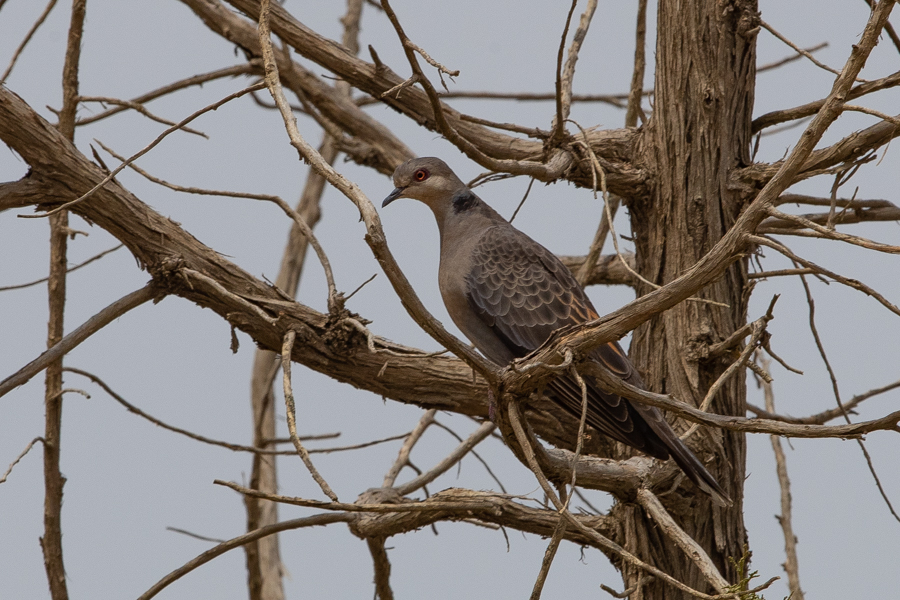
Whilst birding the Tanoumah are I managed to photograph a few of the common species that occur there. Mainly ground dwelling birds seen included Arabian Babblers, in small groups as well a two Streaked Scrub Warblers that normally favour the rocky areas, although the one I photographed had jumped down to feed in a small, cultivated field. The large juniper trees held plenty of the endemic Yemen Thrush and smaller numbers of the large Dusky Turtle Dove. The ever-present Palestine Sunbirds were feeding busily on their favourite flowers.

Arabian Babbler

Dusky Turtle Dove

Palestine Sunbird - female

Palestine Sunbird - male

Streaked Scrub Warbler

Yemen Thrush

Yemen Thrush


27 June 2021

Birding Wadi Grosbeak

This wadi located near Taif is a site where I have seen Arabian Golden-winged Grosbeak on two occasions in previous years but unfortunately not in recent visits. Arabian Golden-winged Grosbeak is the scarcest endemic in Saudi Arabia and the most difficult to see. We again failed to locate it on this visit but did see a few good birds including Arabian Green Bee-eater, Arabian Wheatear, Red-breasted Wheatear, Arabian Serin, Arabian Woodpecker, Yemen Linnet, Yemen Thrush and Streaked Scrub Warbler. I hope the species is still present in the area as this is the only area where birds have been seen in the Kingdom in recent years.

Arabian Green Bee-eater

Arabian Serin

Streaked Scrub Warbler

Arabian Wheatear

Arabian Wheatear - male


07 June 2020

Streaked Scrub Warbler - Abha

Whilst birding the Talea Valley recently I saw a pair of Streaked Scrub-warbler Scotocerca inquieta on some rocks alongside a quite deep wadi. They are a common breeding resident of the western part of Saudi Arabia. There are two subspecies that are endemic to Arabia: S. i. buryi is found in southwestern Saudi Arabia and western Yemen (which this one is) and S. i. grisea is found in western Saudi Arabia, eastern Yemen and Oman. They mainly occur in rocky and mountainous areas where they often occur on rocky wadi hillsides with bushes. They are seen in pairs or small family groups and are active during the daylight hours catching their favoured insect prey.
Streaked Scrub Warbler

14 April 2019

Resident species – Talea Valley

Whilst birding the Talea valley near Abha in the southwest mountains I took the below photos of a few resident species. Arabian Serin is a common species in the Acacia scrub in the valley bottom with Cinnamon-breasted Bunting being common in summer but absent in mid-winter, where it presumably moves to lower elevations where the temperature will; be milder. Genuine Rock Dove is not so easy to see with feral pigeon being a cause of lack of good birds. The bird shown here looks good for a genuine bird and was in good habitat. Long-legged Buzzard in the southwest appear to be aminly dark morph birds whereas those seen in the Eastern Province where I live are the pale morph ones. Other birds seen were House Sparrow, which are a different subspecies to those I see in the east of the Kingdom and Streaked Scrub Warbler.
Arabian Serin
Arabian Serin
Cinnamon-breasted Bunting
Cinnamon-breasted Bunting 
House Sparrow
House Sparrow
Long-legged Buzzard
Long-legged Buzzard
Rock Dove
Rock Dove 
Streaked Scrub Warbler

02 November 2018

Birding Wadi Grosbeak – Near Bani Saad

Wadi Grosbeak is a site where Arabian Golden-winged Grosbeak has been see I recent years although when we went this year we failed to find any. The site is good for a number of other species and Arabian Babbler can always be found there in small noisy groups. Another bird regularly seen in the area is Long-legged Buzzard, which are almost always dark phase birds. These are the most common phase in the west rather than the pale birds we see in the East of the Kingdom. Other birds seen were Eurasian Hoopoe, Cinnamon- Breasted Bunting and Streaked Scrub Warbler.
Arabian Babbler
Arabian Babbler
Cinnamon-breasted Bunting
Eurasian Hoopoe
Long-legged Buzzard 
Scrub Warbler
Scrub Warbler
Scrub Warbler

20 October 2017

Looking for Chukar Partridge – Jebal Lawz

On 7 October Phil Roberts and I went to Jebal Lawz, about 200 kilometres outside Tabuk, to look for Chukar Partridge. We git there before first light and waiting to try to hear any birds calling. The site is very remote and as a result is very quiet so hearing calling birds should have been easy. In reality it was very difficult, made more so by the closed and locked gate across the road preventing access to the top of the mountain where birds had been seen before. We did eventually hear birds calling lower down the road, but they were high up on a rocky mountain. I eventually saw two birds calling from this high cliff face but the distance from the birds was huge and the views poor. We stayed around for almost ten hours trying to hear or see the birds again but without luck. Bird life was very limited in the area and we only saw a few species including White-crowned Wheatear, Montagu’s Harrier, Common Kestrel, Rock Dove, Desert Lark, Tristram’s Starling, Lesser Grey Shrike, Pale Crag Martin, Scrub Warbler and Sinai Rosefinch.
White-crowned Wheatear
White-crowned Wheatear 
Streaked Scrub Warbler
Pale Crag Martin
Pale Crag Martin

12 June 2016

Streaked Scrub Warbler - Thanoumah

Whilst birding the Tanoumah area I came across a pair of Streaked Scrub Warblers on some large boulders well away from the road through Al Mehfar Park in Tanoumah. The birds were mainly keeping in the shade but on one occasion came out in the sun on top of a large rock. This allowed me to take my best photos so far of the species some of which are shown below. The Streaked Scrub Warbler is a regionally common breeding resident in all western areas of the Kingdom. In Central Arabia it is absent from the east of the Tuwaiq escarpment and north of a line from Tabuk to Buraydah but occurs elsewhere. It is very rare in the Eastern Province of the Kingdom. There are three subspecies in Saudi Arabia: S. i. inquieta that occurs in Egypt, Israel and northern Arabia east to the Persian Gulf. S. i. grisea that occurs in western Saudi Arabia, eastern Yemen and Oman and S. i. buryi that occurs in southern Saudi Arabia and western Yemen. S. i. grisea is darker than nominate, but greyer above, with less marked streaking; S. i. buryi is darker still, and very heavily streaked.


04 July 2015

Ten species of Arabian Endemic at Al Mehfar Park – Tanoumah

During the weekend of 19-20 July, Phil Roberts and I went to the southwest of Saudi Arabia for a birding trip. This was a very busy and long weekend with little sleep as we were birding on foot all day and then looking for owls and nightjars all night. We birded the Al Mehfar Park area for most of the day on 20 June and saw plenty of good birds including ten of the thirteen Arabian Endemics that occur in Saudi Arabia including: Philby’s Partridge, Arabian Partridge, Arabian Scops Owl, Arabian Woodpecker, Yemen Warbler, Yemen Thrush, Arabian Wheatear, Yemen Serin, Arabian Serin & Yemen Linnet. The ones we failed to see were: Arabian Waxbill, Arabian Golden-winged Grosbeak and Arabian Spotted Eagle Owl. As it started getting light we went to the more bare area of the site with large boulders in the hope of seeing Philby’s Partridge where we located several small groups totaling 16 birds. Other birds seen included; Five Arabian Scops Owls, four Eurasian Hoopoes, five Arabian Woodpeckers, three Fan Tailed Ravens, six Violet-backed Starlings, 15 Tristram's Starlings, five Yemen Thrushs, 10 White-spectacled Bulbul, Crested Lark, two Barn Swallows, two Pale Crag Martins, six Red-rumped Swallow, four Brown Woodland Warblers, six Streaked Scrub Warblers, African Paradise Flycatcher, Arabian Warbler, three Abyssinian White-eyes, four Arabian Wheatears, four Little Rock Thrushes, seven Gambaga Flycatchers, five Palestine Sunbirds, House Sparrow, Long-billed Pipit, three Arabian Serins 35 Yemen Serins, 30 Yemen Linnets and two Cinammon-breasted Buntings.
Arabian Wheatear
Arabian Wheatear - male
Arabian Woodpecker
Arabian Woodpecker - male
Arabian Woodpecker
Arabian Woodpecker - male
Little Rock Thrush
Little Rock Thrush
Palestine Sunbird
Palestine Sunbird
Philby's Partridge
Philby's Partridge
Streaked Scrub Warbler
Violet-backed Starling
Violet-backed Starling 
Violet-backed Starling
Yemen Linnet
Yemen Linnet
Yemen Serin
Yemen Serin 
Yemen Serin
Yemen Serin

29 April 2015

Last couple of weeks near Tabuk – Bird records by Viv Wilson

Viv has been out birding the Tabuk area the last couple of Weekends and has sent a few photos of his trips. This area is in the northwest of the Kingdom and is very good for both migrants as well as resident species. Viv normally either goes to the desert areas where there are plenty of rock formations or to the large Tabuk wetlands. He takes photos of quite a number of species that are either absent or extremely difficult to see in the Eastern Province of Saudi Arabia where I live and bird so the photos are always interesting to look at. This selection include Scrub Warbler and Tristram’s Starling that do not occur in the Eastern Province and Pale Crag martin that does occur but is only seen near the escarpments in the desert in areas like Shedgum. The main passage migrants seen by Viv cross the country in broad fronts so are seen throughout the Kingdom at the right time of year and these include Barn Swallows, Eurasian Blackcaps, Eurasian Hoopoes, Northern Wheatears and Ortolan Buntings with Common Kestrel being a resident in the area. Viv has kindly allowed me to use some of his photos on my website that are shown below.
Tristram's Starling
Tristram's Starling
Scrub Warbler
Scrub Warbler
Barn Swallow
Barn Swallow
Common Blackcap
Common Blackcap
Eurasian Hoopoe
Eurasian Hoopoe
Northern Wheatear
Northern Wheatear
Ortolan Bunting
Ortolan Bunting
Common Kestrel
Common Kestrel
Pale Crag Martin
Pale Crag Martin