16 July 2023

Warblers breeding – Jubail area

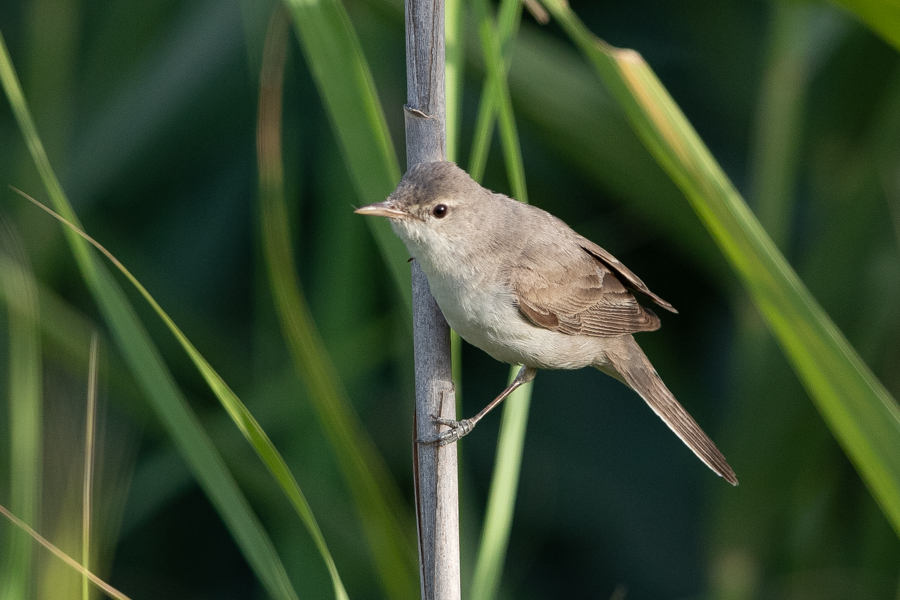
Whilst birding the Jubail area in late-June I sat for an hour or so watching the movements of warblers in a small section of reeds that was easily viewable. There were quite a few warblers calling with most being Clamorous Reed Warblers or Caspian Reed Warblers although Graceful Prinias were also singing occasionally. The birds were not performing well but rather staying out of sight when singing although occasionally one would climb up a reed stem and allow some photos to be taken. All three species mentioned are common breeding birds in Jubail and all now are resident in the area. Another species seen was Great Reed Warbler, which is a common passage migrant but not so regularly seen in summer. The only other species that was visible was House Sparrow with a small flock of about twenty birds in the reeds.

Caspian Reed Warbler

Caspian Reed Warbler

Clamorous Reed Warbler

Great Reed Warbler

House Sparrow


14 July 2023

First returning waders – Dhahran

Whilst birding the Dhahran Waste Water Lake 1 July, I came across the first returning wader in the form of a Common Greenshank. Black-winged Stilts have been around all year and although numbers have fluctuated, I am assuming they are all local birds making the Common Greenshank something of interest in an otherwise quiet period. Another new bird was a white phase immature Western Reef Heron. A grey phase bird has been around the last few weeks, but it disappeared and has been replaced by this smart bird. Herons seen included one Purple Heron, One Western Great Egret, five Grey Heron and thee Black-crowned Night Herons. The only land birds of note were a few Indian Silverbill, several calling Graceful Prinia and a single Pallid Swift.

Graceful Prinia


Graceful Prinia

Grey Heron

Indian Silverbill

Western Reef Heron

Black-crowned Night Heron

Black-crowned Night Heron

Common Greenshank


12 July 2023

Various Terns – Jubail area

Whilst birding the Jubail area in late-June I came across a few different terns flying around. Most birds were White-cheeked Terns which breed on the nearby offshore islands, but there were at least five Caspian Terns. This is another local breeder, but they breed earlier than White-cheeked Tern. Numbers of Caspian Terns build up in the summer and up to 300 have been seen together in previous years. A flock of about twenty Gull-billed Terns flew over at one point and a few Little Terns were feeding along the edge of the Sabkha. I spent quite a lot of time trying to get reasonable shots of the flying birds, but it is not easy to get them in focus and try to get catchlight in their eyes to make them look alive. Below are a few of my best efforts.

Caspian Tern

Caspian Tern

Caspian Tern

Caspian Tern

Caspian Tern

Caspian Tern

Caspian Tern

Gull-billed Tern

Little Tern

Little Tern

Little Tern

White-cheeked Tern

White-cheeked Tern

White-cheeked Tern

White-cheeked Tern


10 July 2023

Juvenile Egyptian Nightjars - Jubail

Whilst birding the Jubail area 7 July I found 16 Egyptian Nightjars with at least seven juveniles. Two of the juveniles could hardly fly and indicate they were bred locally at this site. The plumage is very fresh and smoothly soft, and they pretty much all have nice, neat white fringed coverts forming neat lines across the wing as well as the tertial tips. The birds are lacking the honey-orange spots on the shoulder of the wing that adults show with the adults also generally having darker plumage than the juveniles. Adult birds at this time of year are mainly in heavy primary moult with up to 4 to 6 new inner primaries that can easily be seen on birds in flight.


Juvenile

Juvenile

Juvenile

Juvenile

Juvenile

Juvenile

Juvenile

Juvenile

Juvenile in flight

Adult

Adult


08 July 2023

Juvenile Black-winged Kite – Dhahran Waste Water Lake

Whilst birding Dhahran Waste Water Lake 28 June I came across a juvenile Black-winged Kite in the very early morning. I took a couple of photographs but the light was poor as the sun was not up properly, and they are not particularly good, although you can see the juvenile plumage of the bird. A juvenile at this time of year suggests, as in previous years the species may breed locally now, but as the bird was able to fly properly it could have come from elsewhere. This is only my second juvenile in the Eastern Province and my first in Dhahran. The first record of Black-winged Kite for the Eastern Province was only found on 17 April 2012, but since then has become more common with birds seen in almost every month and every year since the first record and it is now regarded as a scarce visitor to the province. All birds sub-specifically identified in the east of the Kingdom are the eastern subspecies Elanus caeruleus vociferous a subspecies that occurs from Pakistan east to southern & eastern China, Indochina and the Malay Peninsula.


06 July 2023

June juvenile Blue-cheeked Bee-eater – Jubail

Whilst birding at Khafra Marsh in late June I came across two juvenile Blue-cheeked Bee-eater. This is a very unusual date to see this species as they are a common passage migrant seen in spring from March to May and in autumn from mid-August to November. Small numbers can sometimes be seen in June and December. Blue-cheeked Bee-eater is normally commoner than its close relative the European Bee-eater in autumn but less common in spring. As these birds were juveniles there is a chance they bred nearby as this is a very early date for a juvenile. As the birds could fly it is impossible to prove they bred locally, however. 


04 July 2023

Breeding Red-wattled Lapwing – Khafra Marsh

Whilst birding Khafra Marsh in late June, I came across an adult Red-wattled Lapwing flying over calling continuously and trying to lead me away from the area I had originally seen it. It was obvious young were around and I saw another adult run quickly into some long grass where the young were hiding. I didn't stay long looking for the birds as I did not want to disturb them. This is only the third record I know of breeding Red-wattled Lapwing for Saudi Arabia with the first at Sabkhat Al Fasl, Jubail in 2020 and another in Qatif the same year. Red-wattled Lapwing is scarce species in Saudi Arabia with records from Riyadh, the Empty Quarter, and the Eastern Province. In the Eastern province it is regarded as a scarce passage migrant and winter visitor although records are becoming more common with over twenty birds seen together at Shaybah in recent years with others near Hofuf, Jubail and Dhahran. This species is a resident breeder at wetlands in the United Arab Emirates, Qatar and Kuwait, and is gradually colonizing westwards.


02 July 2023

Summer Upcher’s Warbler – Jubail area

Whilst birding the Jubail area in late-June I came across an Upcher’s Warbler. This was a very unusual sight as the birds are passage migrants in the Eastern Province as far as we are aware. I have seen birds in the summer months in the west of the Kingdom but never in the east. The main identification points to separate Upcher’s Warbler and Eastern Olivceous Warbler are that Upcher’s Warbler is generally bigger and has a stockier appearance although this can be difficult to judge on a lone bird if unfamiliar with them. Wings, legs, tail and bill are all longer on Upcher’s Warbler than on Eastern Olivaceous Warbler with the legs and bill being thicker on Upcher’s Warbler. The tail on Upcher’s Warbler is long and ‘full’ and darkens towards the tip, which is not the case in Eastern Olivaceous Warbler. This darkening of the tail can be seen in the below photographs. The tail is also moved in a rather lazy swinging motion often sideways and also upwards and is also fanned, which is not often if ever shown by Eastern Olivaceous Warbler. The exaggerated tail movements of Upcher’s Warbler are often the first thing that draws attention to the species, especially if they are deep in cover. This bird did not move its tail like this and just did a single downwards movement that is similar to Eastern Olivaceous Warbler. Unfortunately, the bird did not stay on the open for very long and good views could not be obtained.