Showing posts with label Arabian Waxbill. Show all posts

11 March 2024

A few endemics – Abha area

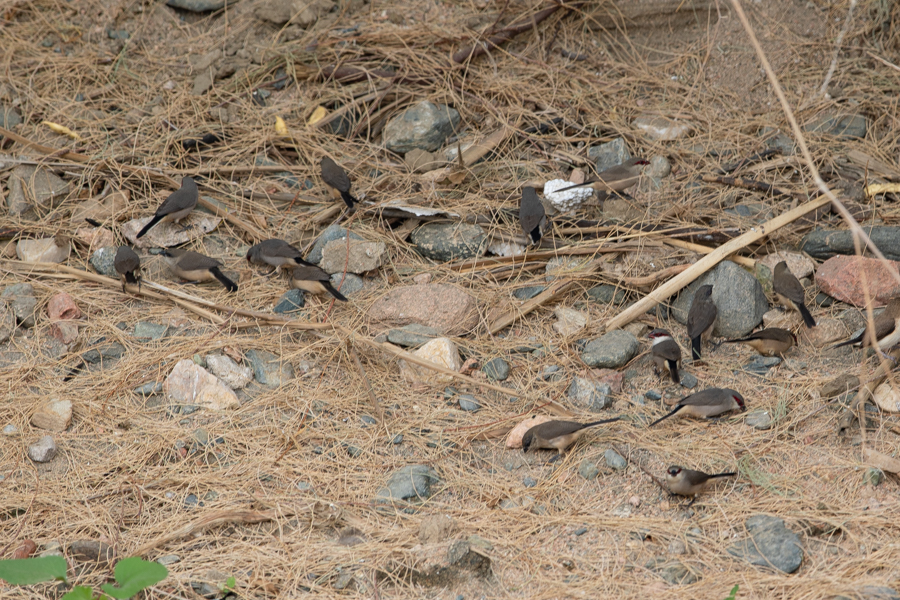
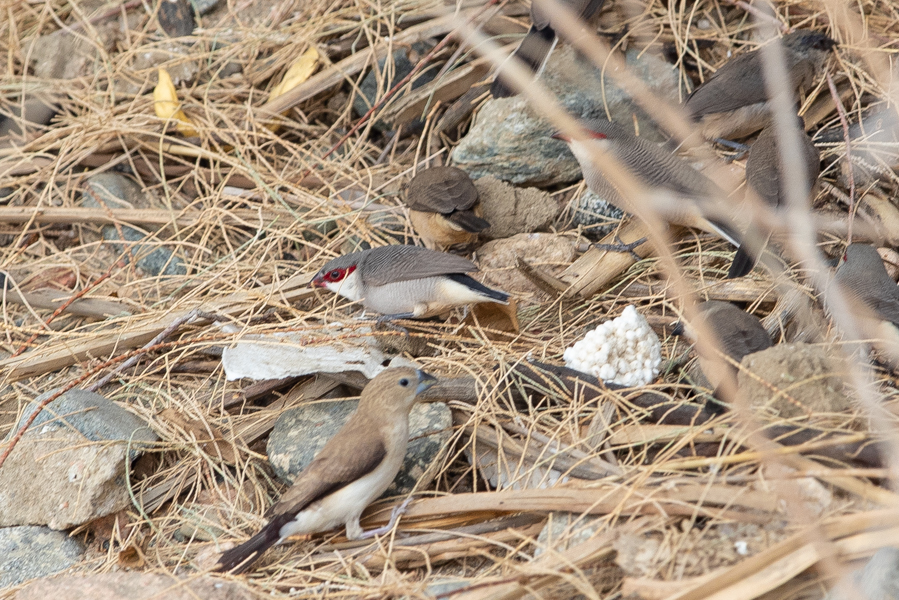
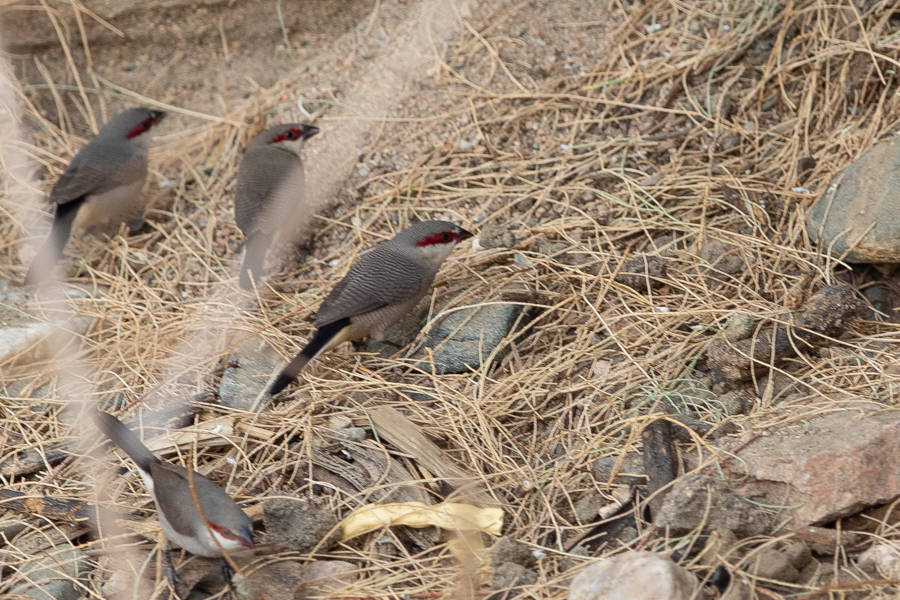
Whilst birding the Abha area recently I managed to photograph a few of the endemics. We saw a number of groups of Arabian Waxbill with up to thirty birds in a group. They never allowed close approach as we were on foot, with the below photo the best I could get. Arabian Wheatears were quite common with both males and females seen. Good numbers of Yemen Linnet and Yemen Thrush were in the large trees but only a single Yemen Warbler could be found

Arabian Waxbill

Arabian Wheatear - female

Arabian Wheatear - male

Yemen Linnet

Yemen Thrush

Yemen Warbler


02 June 2023

Arabian Waxbill – Taif

Whilst birding some small valleys inside Taif city we came across a reasonable flock of Arabian Waxbill Estrilda rubibarba. This species is a rather scarce resident of the Tihama region where they have been seen on Jebal Faifa summit and at Jebal Gaha. Birds have also been seen near Tanoumah, Al Baha and as far north as Taif where they can be seen at Wadi Thee Gazelle and several wadis in the town itself, such as the one we saw them at. The Arabian Waxbill is endemic to Saudi Arabia and Yemen and occurs in the mesic uplands of the Tihamah foothills, occasionally straying onto the lowland Tihamah proper. The species is described as scarce in southern Saudi Arabia and the population is suspected to be in decline due to habitat loss as a result of the increasing use of modern agricultural techniques. They are highly social, and occur from 250-2,500 m in fertile cultivated Wadis, plains, rocky hillsides and terraced slopes, usually with a dense cover of trees and bushes. The species roosts communally in this dense vegetation, and recently fledged juveniles have been recorded in May. It has become closely associated with regularly irrigated agricultural areas with flowing water and is one of the more difficult of the Arabian Endemics to see.


16 June 2021

Birding Talea Valley

Whilst birding the western mountains we visited an area near Abha called the Talea Valley. This is a very good birding location with several endemic species. We saw Arabian Warbler, Arabian Waxbill Arabian Wheatear, Arabian Woodpecker, Yemen Linnet and Yemen Thrush. I have seen Arabian Woodpecker in the area previously but the last few years despite many visits to the area I had failed to locate them again the the Talea Valley. We saw an adult male and also heard it calling but could not get close enough for good photos. Another species seen here previously, but nor regularly by me, is Arabian Waxbill. They were seen in flocks up to fifty birds mainly feeding on the seeding grasses, but again did not allow close approach. Apart from the endemic species other good birds can be seen in the valet and we located Cinnamon-breasted Bunting, Hamerkop, Dusky Turtle Dove and Ruppell’s Weaver amongst others. We also saw a few interesting insects including Common Grass Yellow and Azure Skimmer.


Cinnamon-breasted Bunting

Cinnamon-breasted Bunting

Arabian Waxbill

Arabian Waxbill

Hammerkop


09 July 2020

Arabian Waxbill - Abha

AWhilst birding the farm on the Riyadh Escarpment I came across a pair of Arabian Waxbill Estrilda rubibarba. This is a rather scarce resident of the Tihama region where they have been seen on Jebal Faifa summit and at Jebal Gaha. Birds have also been seen in the Asir mountains near Abha, Tanoumah, Raghadan Forest area of Al Baha and as far north as Taif where they can be seen at Wadi Thee Gazelle and several wadis in the town itself. The Arabian Waxbill is endemic to Saudi Arabia and Yemen and occurs in the mesic uplands of the Tihamah foothills, occasionally straying onto the lowland Tihamah proper where we have seen birds at Malaki Dam Lake. The species is scarce in southern Saudi Arabia and the population is suspected to be in decline due to habitat loss as a result of the increasing use of modern agricultural techniques. They are highly social, and occur from 250-2,500 m in fertile cultivated Wadis, plains, rocky hillsides and terraced slopes, usually with a dense cover of trees and bushes. The species roosts communally in this dense vegetation, and recently fledged juveniles have been recorded in May. It has become closely associated with regularly irrigated agricultural areas with flowing water. It is one of the more difficult of the Arabian endemics to see.
Arabian Waxbill

Arabian Waxbill

Arabian Waxbill


09 May 2017

Early morning down the Raydah Escarpment – Abha

Whilst in the Asir Mountains recently I went down the Raydah Escarpment early in the morning. This is the best place and best time to try to locate Arabian Partridge and as normal I was not disappointed with a number of birds calling and a couple seen on the roadside. A stop at the disused farm was relatively good with good views of Abyssinian White-eye and plenty of other resident species. Further down I had a party of four Arabian Waxbills an Arabian endemic species that is far from easy to see and several Laughing Doves.
Arabian Partridge
Arabian Partridge
Arabian Waxbill
Arabian Waxbill
Abyssinian White-eye
Laughing Dove
Laughing Dove

30 December 2016

Arabian Waxbill

Arabian Waxbill Estrilda rubibarba is a rather scarce resident of the Tihama region where they have beens seen on Jebal Faifa summit and at Jebal Gaha as well as at the Raghadan Forest area of Baha. Birds have also been seen near Tanoumah, Al Baha and as far north as Taif where they can be seen at Wadi Thee Gazelle and several wadis in the town itself. The Arabian Waxbill is endemic to Saudi Arabia and Yemen and occurs in the mesic uplands of the Tihamah foothills, occasionally straying onto the lowland Tihamah proper. The species is described as rare in southern Saudi Arabia and the population is suspected to be in decline due to habitat loss as a result of the increasing use of modern agricultural techniques. They are highly social, and occur from 250-2,500 m in fertile cultivated Wadis, plains, rocky hillsides and terraced slopes, usually with a dense cover of trees and bushes. The species roosts communally in this dense vegetation, and recently fledged juveniles have been recorded in May. It has become closely associated with regularly irrigated agricultural areas with flowing water. It is one of the more difficult of the Arabian Endemics to see.


07 August 2016

Plenty of endemic bird species in Wadi Thee Gazelle - Taif

Whilst birding the Wadi Thee Gazelle area of Taif we came across a good number of Arabian Endemic Species, seeing eight out of the twelve species. The high rainfall in the mountains in spring 2016 appears to have produced a good breeding season for many species and adults with juveniles of Arabian Wheatear and Arabian Waxbill were seen. Very large numbers of Arabian Serins were seen in many areas and Yemen Thrush also appeared to be quite numerous. Other good birds were also seen in this excellent birding location and I managed to photograph a few Cinnamon-breasted Buntings as well as a Eurasian Hoopoe.
Arabian Serin
Arabian Serin
Arabian Waxbill
Arabian Waxbill
Arabian Wheatear
Arabian Wheatear
Arabian Wheatear
Arabian Wheatear
Yemen Thrush
Yemen Thrush
Cinnamon-breasted Bunting
Eurasian Hoopoe
Eurasian Hoopoe

01 August 2016

Arabian Waxbill in Wadi Thee Gazelle – Taif

The Arabian Waxbill is an endemic species of Arabia and occurs in the south and west of the country where it is one of the most difficult endemics to see. Phil Roberts and I managed to see up to ten birds in a wadi in Wadi Thee Gazelle, where the birds were initially seen on a loose telephone wire and then later coming down to drink from small pools created by the high rainfall this spring in the mountains. The birds seen included a minimum of four juveniles suggesting breeding had taken place nearby. The most northern records are from Wadi al Sailah, southern Hejaz at 1700 metres, furthest north record. It is a rare and local breeding resident on the Tihama and southern Red Sea coast where it frequents reed beds and thick bush country. Has been seen in the Asir mountains to 2000 metres at Raydah Escarpment farm and Tanoumah. The species is described as rare in southern Saudi Arabia and the population is suspected to be in decline due to habitat loss as a result of the increasing use of modern agricultural techniques. They are highly social, and occur from 250-2,500 m in fertile cultivated Wadis, plains, rocky hillsides and terraced slopes, usually with a dense cover of trees and bushes and almost always near water. The species roosts communally in this dense vegetation, and recently fledged juveniles have been recorded in May. It has become closely associated with regularly irrigated agricultural areas with flowing water.
Arabian Waxbill

Arabian Waxbill

Arabian Waxbill

Arabian Waxbill

Arabian Waxbill

Arabian Waxbill

Arabian Waxbill

28 July 2016

Looking for Arabian Waxbill in Wadi Waj – Taif

Phil and I went to Wadi Waj, a site near the center of Taif. This site is a wastewater runoff stream that permanently flows and has good growth of reeds and sedges nearby. It is a place where Waxbill has been seen and where we saw two last summer. We went on the hope of seeing the species again as they are not easy to locate and managed to see the Waxbills soon after we arrive. They were in some sedges near the water but flew off and than we saw a flock of about fifteen birds fly in and join them. There were plenty of other birds about including Graceful Prinia’s and plenty of Green Bee-eaters. On our return we located a Bruce’s Green Pigeon and as it was getting dark we saw a Plain Nightjar fly over and saw it again a few times over a filed across the stream from us. This site appears to a good one for Plain Nightjar as well as we saw one here last summer. The nightjar rounded off a good selection of birds at this site in the centre of Taif.
Arabian Waxbill
Arabian Waxbill
Arabian Waxbill
Arabian Waxbill
Bruce's Green Pigeon
Green Bee-eater
Green Bee-eater

23 July 2015

Arabian Waxbill & Arabian Serin - Wadi Waj

Phil and I were taken to Wadi Waj, a site near the center of Taif, by a local birder Ali. He very kindly showed us the site and drove us around it in his four-wheel drive car, as our hire car could not make it. This site is a wastewater runoff stream that permanently flows and has good growth of reeds and sedges nearby. It is a place where Ali regularly sees Arabian Waxbill and Arabian Serin, two species that Phil and I were still trying to get decent photographs of. We saw the Waxbills almost as soon as we arrived but they were high in the tall trees and only average photos were obtained. We later saw them again when returned in the evening but again high in the trees. We did, however, get good views of Arabian Serin on several occasions. There were plenty of other birds about including Nile Valley Sunbirds, Graceful Prinias, Black Scrub Robins and plenty of Green Bee-eaters. An unusual bird seen almost immediately on arrival was a Scaly-breasted Munia, a species that Ali had not seen here before, but this may have been an escape from somewhere? A few wetland birds were seen as well including three Squacco Herons and a Green Sandpiper. On our return visit and as it was getting sark we located a Bruce’s Green Pigeon in a tall tree rounding off a good selection of birds at a good local site.
Arabian Serin
Arabian Serin
Arabian Serin
Arabian Serin
Arabian Waxbill
Arabian Waxbill
Bruce's Green Pigeon
Graceful Prinia
Graceful Prinia
Nile Valley Sunbird
Nile Valley Sunbird
Scaly-breasted Munia
Squacco Heron
Squacco Heron