Showing posts with label Yemen Thrush. Show all posts

03 August 2024

Birding Alsharaf Park - Tanoumah

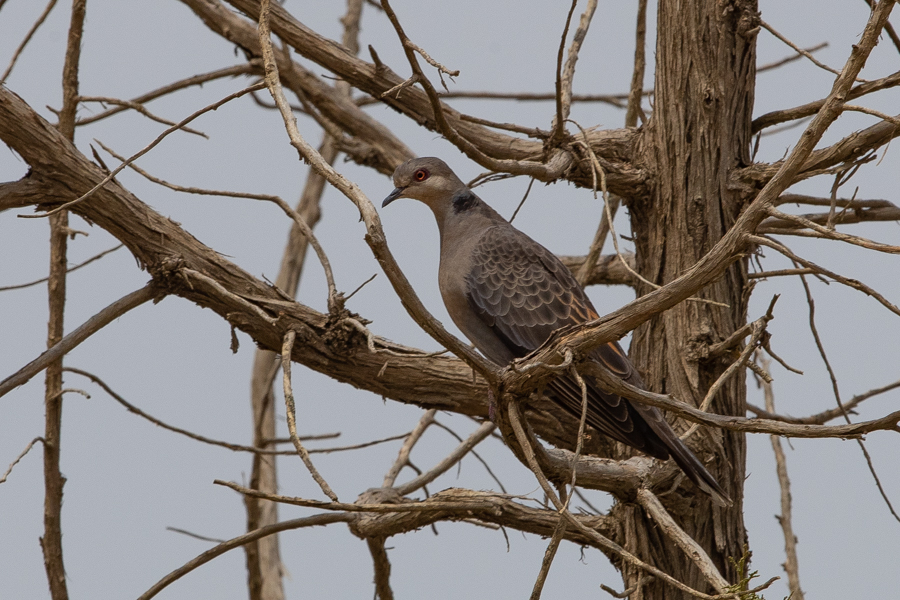
Alsharaf Park is a beautiful park in Tanoumah with the highest oeak in the area in it. It has excellent habitat nearby and plenty of the resident common species can be seen. Dusky Turtle Dove is common as is Yemen Thrush that can be heard calling commonly in the area. Brown Woodland Warbler is a common bird but one that is difficult to get excellent views of as it is normally deep in cover. White-spectacled Bulbul, however, perch out on the open frequently, often along the roadside. Violet-backed Starling is a summer breeding visitor and not too easy to photograph which is the same for African Shikra. Fan-tailed Raven are often seen flying over the large rocks calling.

Brown Woodland Warbler

Dusky Turtle Dove

Fan-tailed Raven

Fan-tailed Raven

Gambaga Flycatcher

Shikra

Violet-backed Starling

White=spectacled Bulbul

Yemen Thrush

Yemen Thrush


11 March 2024

A few endemics – Abha area

Whilst birding the Abha area recently I managed to photograph a few of the endemics. We saw a number of groups of Arabian Waxbill with up to thirty birds in a group. They never allowed close approach as we were on foot, with the below photo the best I could get. Arabian Wheatears were quite common with both males and females seen. Good numbers of Yemen Linnet and Yemen Thrush were in the large trees but only a single Yemen Warbler could be found

Arabian Waxbill

Arabian Wheatear - female

Arabian Wheatear - male

Yemen Linnet

Yemen Thrush

Yemen Warbler


08 June 2023

Common Birds – Tanoumah

Whilst birding the Tanoumah are I managed to photograph a few of the common species that occur there. Mainly ground dwelling birds seen included Arabian Babblers, in small groups as well a two Streaked Scrub Warblers that normally favour the rocky areas, although the one I photographed had jumped down to feed in a small, cultivated field. The large juniper trees held plenty of the endemic Yemen Thrush and smaller numbers of the large Dusky Turtle Dove. The ever-present Palestine Sunbirds were feeding busily on their favourite flowers.

Arabian Babbler

Dusky Turtle Dove

Palestine Sunbird - female

Palestine Sunbird - male

Streaked Scrub Warbler

Yemen Thrush

Yemen Thrush


12 June 2019

Woodland birding - Billasimer

The tall woodland around Billasimer looked good for birdwatching and as neither Phil or I had birded the area we spent both our available mornings at the location. There are plenty of good looking sites and a few nice tracks that may hold nightjars (Plain and Montane), for which we will look next time in the area. We found a couple of very deep valleys with Philby’s Partidge calling regularly but the birds stayed hidden in the woods and did not fly as normal, so we failed to even see them. Arabian Babblers were common along the edge of the valley and Red-breasted Wheatear were seen on the way into the location. Other birds seen and photographed were Little Rock Thrush, Yemen Thrush and Abyssinian White-eye. Brown Woodland Warbler was common and plenty of Dusky Turtle Doves were seen with a couple of Arabian Magpie as calling and flying up and down the valley.
Abyssinian White-eye
Arabian Babbler
Arabian Babbler
Arabian Babbler
Arabian Babbler
Little Rock Thrush
Little Rock Thrush
Yemen Thrush
Yemen Thrush

30 November 2018

Quraish Valley – Tanoumah

Whilst birding a valley on the outskirts of Tanoumah near the village of Quraish I came across a few good birds. There were plenty of common species such as Laughing Dove and White Spectacled Bulbul, some summer visitors such as Violet-backed Starlings and a few good south-west highland resident species such as Shikra and Palestinian Sunbird. Shikra is a scarce breeding resident of the southwest of Saudi Arabia with a few scattered records of migrants elsewhere. Nets were set at one point and Yemen Thrush and Little Rock Thrush trapped.
Laughing Dove
Little Rock Thrush
Palestine Sunbird
Shikra
Violet-backed Starling
White-spectacled Bulbul
Yemen Thrush

18 November 2018

Birding Wadi Thee Ghazal – Taif

Wadi Thee Ghazal is an excellent site on the outskirts of Taif that is always a great place to see some of the Arabian Endemics. Arabian Wheatear, Yemen Thrush and Arabian Serin are normally easy to find at the site and other southwestern specialities such as Little Rock Thrush can be located quickly. The dry wadi bottoms are normally very good for locating good birds with the chance of seeing Arabian Waxbill among other species. We did not locate this species this visit, however.
Arabian Wheatear
Arabian Wheatear - juvenile
Arabian Wheatear
Arabian Wheatear - female
Little Rock Thrush
Little Rock Thrush
Yemen Thrush
Yemen Thrush

26 December 2016

Yemen Thrush

Yemen Thrush Turdus menachensis is a common & widespread resident of the of the south-west highlands, favouring areas of thick bush mainly at Jebal Souda and Al Jarrah as well as the areas around Tanoumah. Birds are relatively common in the Baha area in the middle section of the Goldebn Tulip valley and the Raghadan Forest area. In 1987 it was also common and widespread in the highlands and no apparent change in population seems to have occurred over this period. Also occurs in the Tihama around jebals such as Jebal Aswad and Jebal Gaha. It is a medium-sized (23 cms), plain brown bird with the male being olive-brown above, paler and greyer below, with dark narrow streaks radiating across the buff-grey chin and throat onto the breast. The stout bill is orange-yellow, the legs are flesh-coloured to yellow and, in flight, the orange underwing-coverts can be seen. The female is very similar but paler overall, being buff below, often with dark shaft streaks on the belly and flanks, and with a duller-coloured bill. It has a fluty song, mostly heard at dawn, containing a series of high-pitched phrases and an explosive call ‘chuck-chuck’, from which it is most easily located. It is classified as Vulnerable on the IUCN Red List 2006 as its population is likely to be small, 2500 to 9999 birds and declining owing to excessive exploitation and clearance of its montane woodland habitat although in Saudi Arabia its woodland habitat is protected in at least two protected areas: Raydah Reserve and Asir National Park. It is native to the mountains of south-western Saudi Arabia and western Yemen and has a very local distribution. It can be very skulking in nature, remaining motionless for long periods of time. The species is confined to mountainous areas with a dense cover of native trees and shrubs including woodlands, thickets, copses, orchards and large gardens, although adjacent open areas are also frequented. This species occurs from 1,200 to 3,100 m above sea level, mainly above 1,700 m, and at its lowest elevations it is restricted to thick vegetation along watercourses. This small forest bird forages on the ground among dead and rotting vegetation, feeding on terrestrial invertebrates such as snails, and on fruits such as those of Rosa, Juniperus, Olea and Ficus species. The Yemen thrush breeds from March to August, with the nest positioned one to four metres above ground in a bush or tree-fork, usually in dense cover. The nest consists of a firm cup made of dry grass, small twigs, moss and thin bark strips, with a mud interior lined with fine grass and rootlets, into which one to three eggs (usually two) are laid.


11 September 2016

Yemen Thrush - Tanoumah

Whilst birding the Tanoumah area in summer 2016 I saw a good number of Yemen Thrushes Turdus menachensis including a pair of adults feeding a very young juvenile on the ground. I am not certain if the bird could fly as it was very young but the parents were in close attendance and hopefully it made it to adulthood. The Yemen Thrush is endemic to the southwest Arabia and in Saudi Arabia occurs in the highlands of the Asir mountains where it is a locally common breeding resident in Juniper, especially the Jebel Soudah area. It is mainly seen between 2000 – 3000 metres.
Yemen Thrush

Yemen Thrush

Yemen Thrush

Yemen Thrush

Yemen Thrush

02 September 2016

African Olive Pigeon – Raydah Esacarpment

Whilst birdwatching in the Raydah Esacarpment recently Phil Robrts and I saw two African Olive Pigeons. This was a species we had been looking for but had failed to see on many previous trips to the southwest of the Kingdom. It was only discovered as a new species for Saudi Arabia in the mid 1980’s by Mike Jennings. JENNINGS, M. C. 1986. The Olive Pigeon Columba arquatrix on Jebel Suda, Asir Province: a new bird species for Saudi Arabia and the Arabian Peninsula. J. Saudi Arab. Nat. Hist. Soc. (2)6:35-36. The birds we saw were seen just above the Raydah Farm where a number of other good birds were also seen including Yemen Thrush, Yemen Serin and Palestine Sunbird. We birded the entire valley seeing good birds in many places and plenty of Blackstart are the village near the bottom where African Grey-headed Kingfisher and Bruce’s Green Pigeon were also seen.
African Olive Pigeon
Yemen Thrush
Yemen Thrush
Palestine Sunbird
Palestine Sunbird
Palestine Sunbird
Palestine Sunbird
Blackstart
Blackstart
Blackstart
Blackstart
Blackstart
Blackstart