Showing posts with label Water Pipit. Show all posts

26 November 2024

Pipits on the Cricket & Football Fields – Dhahran Hills

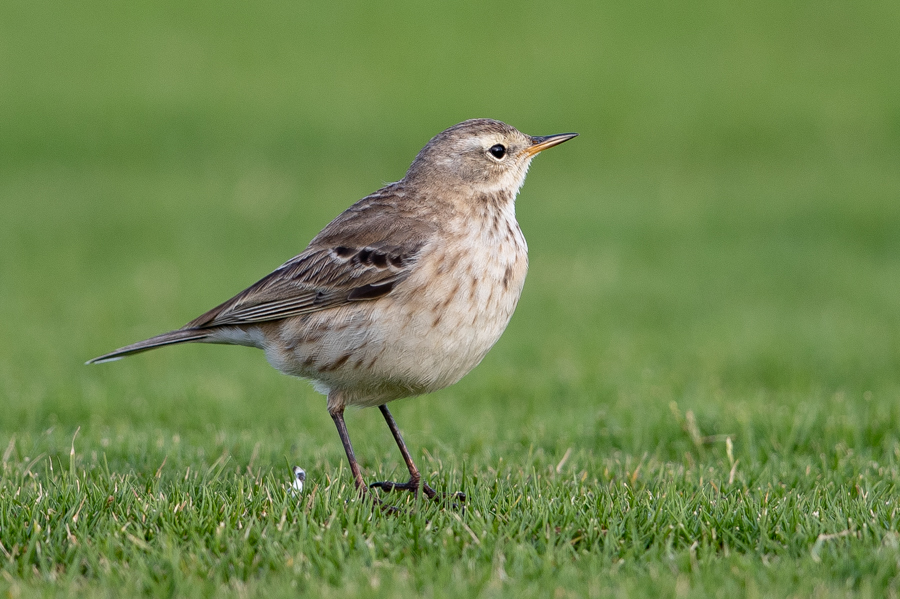
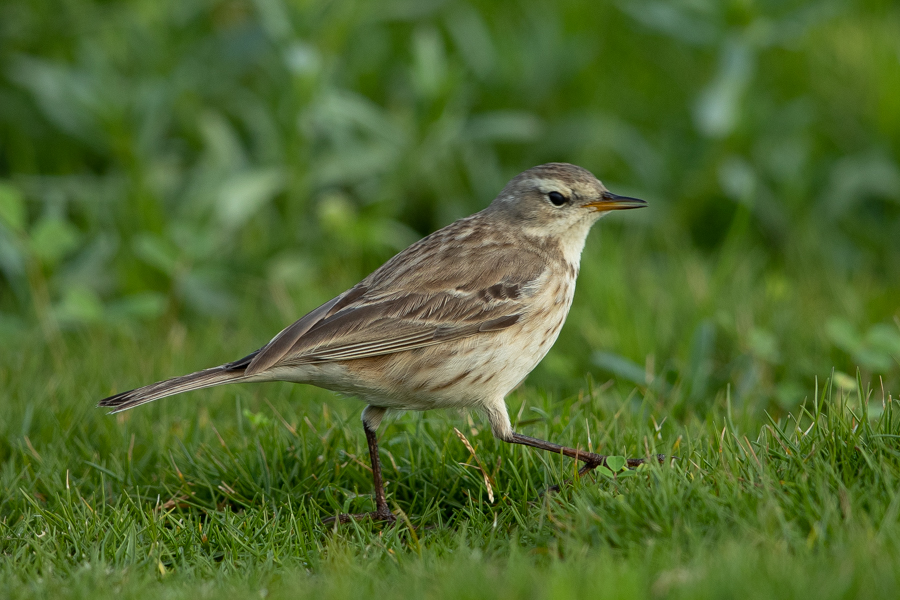
The numbers of Water Pipit have been building nicely over the last couple of weeks and now up to thirty can be seen on a single visit. They are not shy at all and allow very close approach even on foot. In the last few days a small number of Red-throated Pipit have joined them but these are not so tame and fly quickly when you try to approach them. A single Tawny Pipit was also seen, but not photographed, on a single day and they should become more common over the next few weeks. 

Water Pipit

Water Pipit

Water Pipit


Red-throated Pipit

Red-throated Pipit

Red-throated Pipit


14 November 2024

First Water Pipits of winter – Dhahran Hills

Birding the football and cricket fields in Dhahran Hills recently produced the first five Water Pipits of the winter. Numbers should now build up into February when up to fifty have been seen on these sites. This species is a common winter visitor occurring from October until April and the birds were happily feeding on the short grass of the fields. Although they are common in the Eastern Province, most records in Dhahran are of less than five. As I could drive the car close to the football pitch, I was able to get close to one bird with the others much further out on the fields. 


26 November 2023

Good numbers of Water Pipits – Dhahran Hills

Birding the football and cricket fields in Dhahran Hills over the last few weeks has produced more than fourty Water Pipits. This species is a common winter visitor occurring from October until April with numbers only building up this year from the end of October and early November. The birds feed on the short grass of the Cricket Field and football fields finding plenty of small insects and larvae to eat. Although they are common in the Eastern Province, As I could drive the car close to the pitch, I was able to get close to a few different birds. Most were in the centre of the football field, but a few were closer to the field edge, allowing some close-up photos to be taken. A few Red-throated and Tree Pipit have also been seen but no photographs were taken.


12 February 2023

Increasing numbers of Water Pipits – Dhahran Hills

Birding the football and cricket fields in Dhahran Hills recently produced more than fifty Water Pipits. This species is a common winter visitor occurring from October until April and were happily feeding on the short grass of the football fields. Although they are common in the Eastern Province I have never seen this number together in Dhahran where less than five are normally seen. As I could drive the car close to the pitch, I was able to get close to a few different birds. Most were in the centre of the football field but a few were closer to the field edge, allowing some close-up photos to be taken. Also feeding on the field were several White Wagtail and a single Red-throated Pipit, which kindly moved from the centre of the football pitch to close to the edge for better photos. 

Water Pipit

Water Pipit

Water Pipit

Water Pipit

Water Pipit

Water Pipit

White Wagtail

White Wagtail

Red-throated Pipit

Red-throated Pipit

Red-throated Pipit


06 December 2022

Plenty of Water Pipits – Dhahran Hills

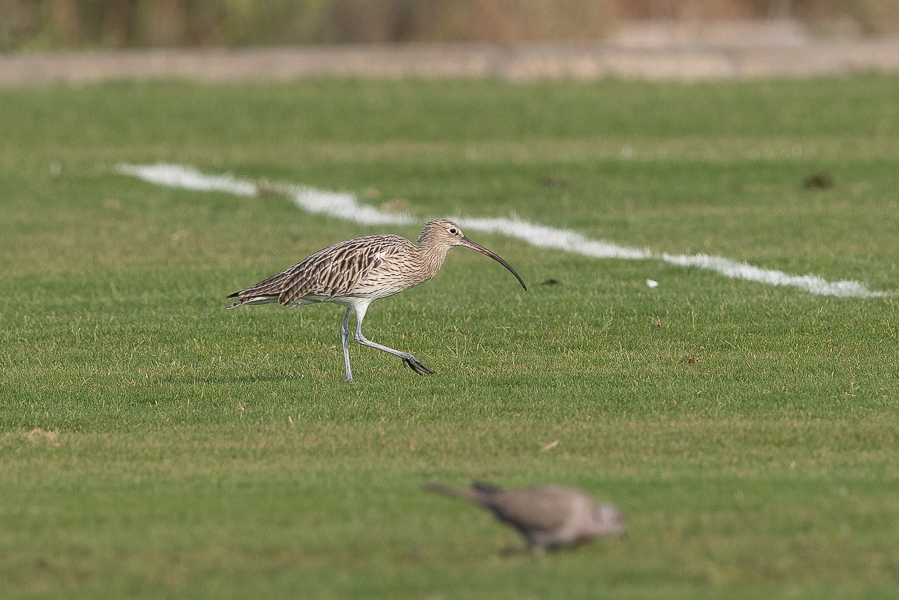
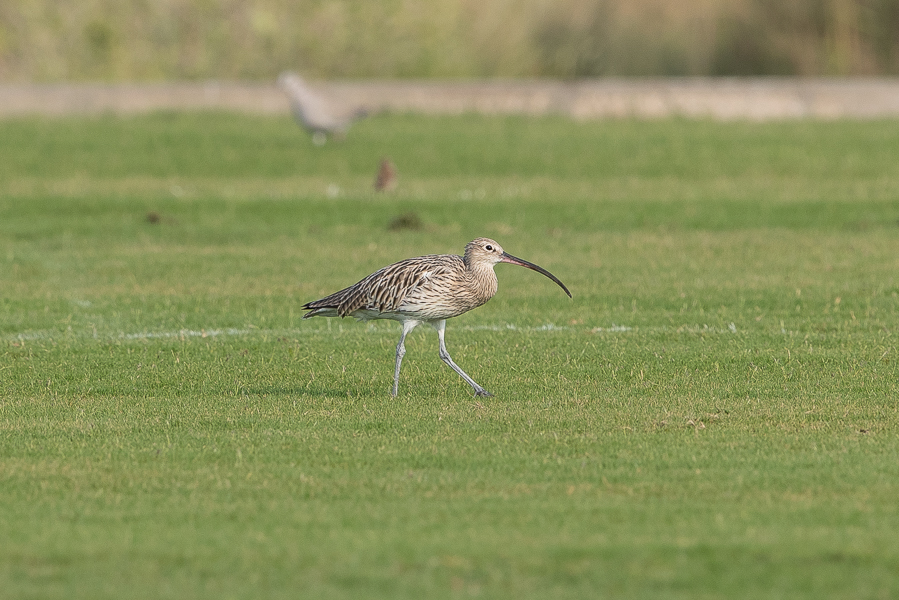
Birding the football and cricket fields in Dhahran Hills recently produced more than twenty Water Pipits. This species is a common winter visitor occurring from October until April, but they are mainly seen next to large water bodies. I recently saw some on grass fields in Deffi Park and these were happily feeding on the short grass of the football fields. As I could drive the car close to the pitch, I was able to get close to one bird as it moved from the centre of the field to the field edge. The light was a bit harsh, but I managed one good photo. Also feeding on the field were several Western Cattle Egret, which are also a common winter visitor like the Water Pipit and a single Eurasian Curlew a much less common visitor to the camp although common on the coast. The Curlew was busy pulling large black grubs from the soft ground but remained at quite a distance. 

Water Pipit


Water Pipit
Eurasian Curlew

Eurasian Curlew

Western Cattle Egret

Western Cattle Egret


01 January 2022

Citrine Wagtail & Water Pipits – Khafra Marsh

Whilst birding Khafra Marsh in December we came across a small wet ditch which held a few interesting birds including a number of Water Pipit and a smart Citrine Wagtail that flew up and landed in a nearby tree allowing good views and some photographs to be taken. Citrine Wagtail is a regular though local winter visitor to the Eastern Province of Saudi Arabia that was not seen until 1975. I have seen quite a few in the last few years indicating the species is becoming more common in the region, particularly as they are not so difficult to identify in full breeding plumage. They are almost always found near water and favour feeding on wet roadside puddles, but are not the easiest species to photograph as they are quite nervous and flighty and rarely stay still for long. March appears to be a month when passage occurs through the region as more birds are seen during this month than any other although they can be seen at any time from autumn through winter until spring. Water Pipit is a common wintering species in the area and occurs widely throughout the Kingdom. Birds generally arrive in late October and stay until April. They also favour wet areas and can be locally common.

Water Pipit

Citrine Wagtail

Citrine Wagtail


22 April 2019

Last of the wintering Bluethroats - Haradh

Whilst birding the Haradh area recently we saw good numbers Bluethroats. There were calling from an area of long grass in a partly cut pivot field and consisted mainly of Red-spotted Bluethroats but two White-spotted birds were also seen. There were double figures seen which is a good number of a non-wetland area and were probably the last wintering birds being joined by migrants on their way to their breeding grounds. They are really beautiful birds but not so easy to get good photos of as they seldom allow close approach. Other birds seen in the fields nearby were Namaqua Dove and Water Pipit.
Red-spotted Bluethroat
Water Pipit
Water Pipit
Namaqua Dove
Namaqua Dove

15 February 2018

Larks and Pipits – Jubail Farm

Whilst birding a set of pivot irrigation fields near Jubail I came across quite a good number of Eurasian Skylark. They were all using the wet pivot fields for feeding and occasionally flying out into the dry edges before going back into the grass. Other birds seen in good numbers in these fields included both Water Pipit and Tawny Pipit. A few harriers were present over the fields, including both Western Marsh and Montagu’s Harriers
Eurasian Skylark
Eurasian Skylark 
Tawny Pipit
Tawny Pipit 
Tawny Pipit
Tawny Pipit
Water Pipit
Water Pipit

11 February 2018

Winter Ringing – Sabkhat Al Fasl

We went ringing in early January 2018 and set a couple more nets than normal. As it was mid-winter bird numbers were down but we still caught quite a few birds for us totalling 29 and including Common Chiffchaff, Common Kingfisher, House Sparrow, Red-spotted Bluethroat and the difficult to catch Water Pipit.
Common Chiffchaff
Common Chiffchaff
Common Kingfisher
Common Kingfisher
House Sparrow
House Sparrow 
Red-spotted Bluethroat
Water Pipit
Water Pipit


21 January 2018

First ringing trip of 2018 – Sabkhat Al Fasl

We went ringing on 12 January and caught 29 birds of 10 species including Common Kingfisher, Clamorous Reed Warbler, Little Bittern, Graceful Prinia, Red-spotted Bluethroat, Moustached Warbler, Common Chiffchaff, White-eared Bulbul, Water Pipit and Daurian Shrike. White-eared Bulbul was a new species for us at our ringing site, although birds are common in the region they are scarce at the site itself with birds only being seen in the last year suggesting they may be colonising the area. We set nets in the same locations each tip with some over water and other over land in rides between reed beds. We set and additional three nets along the edge of a reed bed as well as the normal ten nets we set every trip (11 x 18 metre and 2 x 15 metre). As normal, we arrived well before first light and set the nets during the hours of darkness. The best time for catching birds for us are the first couple of hours of day and this was the case this trip. We retrapped 11 birds including five Clamorous Reed Warbler, two Red-spotted Bluethroat, a Graceful Prinia and a Little Bittern. The Clamorous Reed Warblers were from as early as 23 September 2016 with the Bluethroats only trapped this winter. The Graceful Prinia was trapped in November 2017 and the Little Bitter in March 2017. The number of birds was less than normal as it was the middle of winter and the weather was very cold with temperatures in the morning only reaching 5 degrees Celsius. Normally we have to take care of birds overheating but it was the opposite this time with care needed to ensure the birds did not become too cold.
Common Chiffchaff
Common Chiffchaff
Red-spotted Bluethroat
Common Kingfisher
Common Kingfisher
Water Pipit
Water Pipit
Little Bittern
Little Bittern