Showing posts with label Eastern Black Redstart. Show all posts

12 March 2023

Common Chiffchaffs & Eastern Black Redstart – Al Uqayr

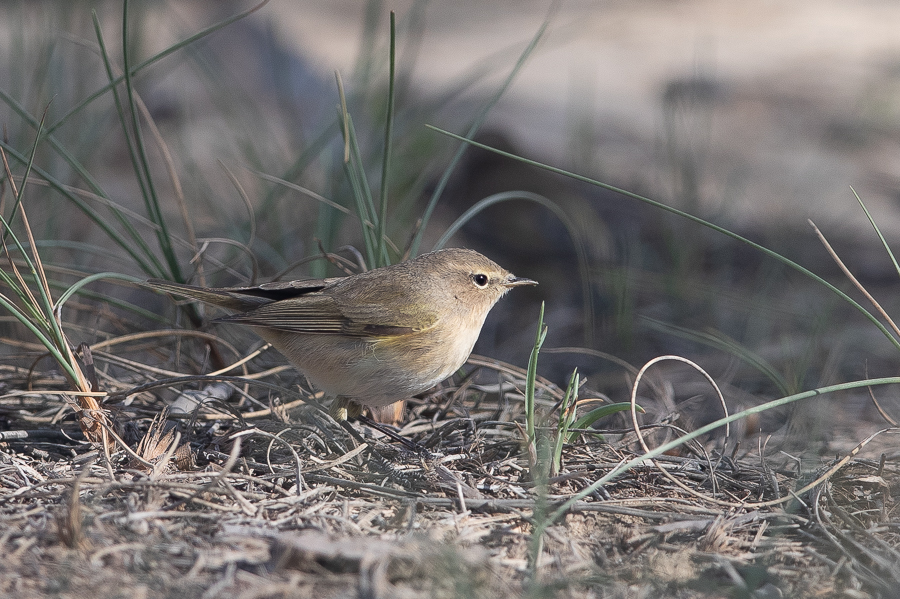
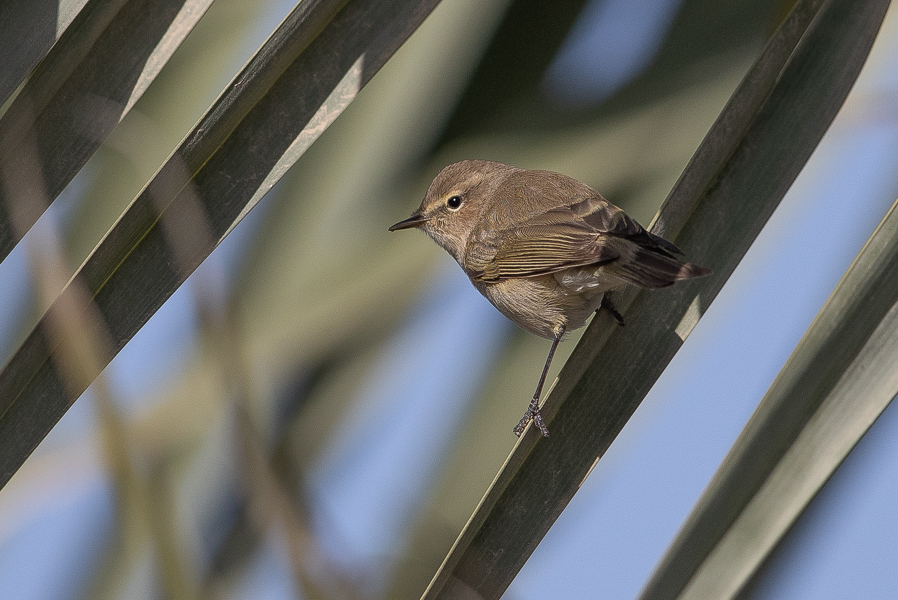
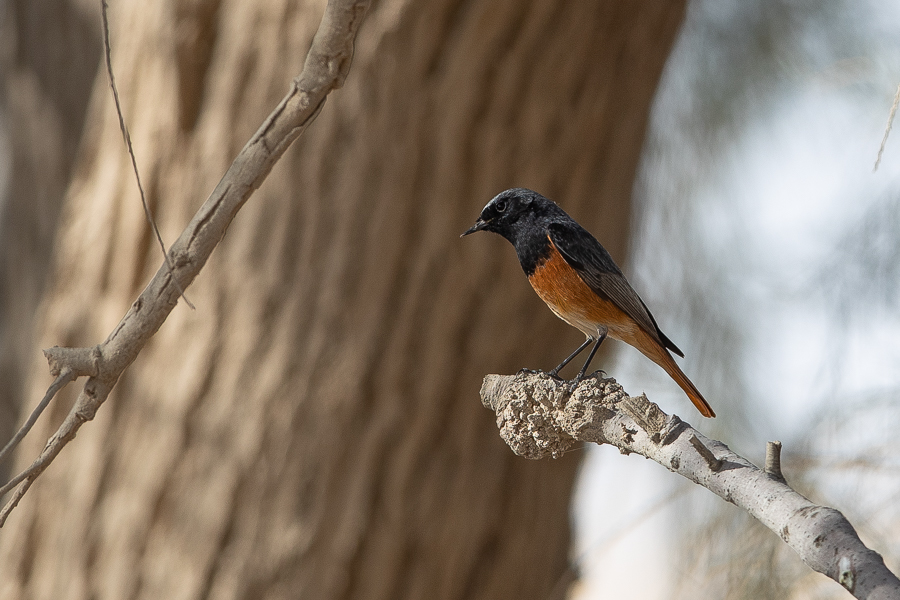
Phil and I went to Al Uqayr in late February and stopped at a small farm where I saw a nice Eastern Black Redstart in the palm plantation. The bird disappeared but after gaining entry to the farm we looked around and managed to re-find it. Eastern Black Redstart a species that is not commonly seen by us. The species is regarded as an uncommon migrant and winter visitor most areas of Saudi Arabia but is a common winter visitor to the western mountains of Hejaz and Asir. Most records are Eastern Black Redstart semirufous although Western Black Redstart also occurs in very small numbers in the northwest of the Kingdom. Whilst looking around the farm we also found at least five Common Chiffchaff and several House Sparrow that looked small with whitish cheeks and underside so could be the hofufae subspecies.

Common Chiffchaff

Common Chiffchaff

Common Chiffchaff

Common Chiffchaff

Common Chiffchaff

Common Chiffchaff

Common Chiffchaff

Eastern Black Redstart

Eastern Black Redstart

Eastern Black Redstart


House Sparrow

House Sparrow


09 February 2017

Black Redstart at Deffi Park - Jubail

Whilst birding Deffi Park in recent weeks it has become obvious a female Black Redstart Phoenicurus ochruros is wintering in the park. The bird can be seen on every visit feeding around on the ground under the trees. Black Redstart is an uncommon migrant and winter visitor to most areas of Saudi Arabia. They are more common winter in the mountainous Hejaz and Asir regions than elsewhere with most records referring to Eastern Black Redstart Phoenicurus ochruros phoenicuroides. As the bird is a female it is very difficult to assign to race but is an interesting bird to see and study. In Riyadh they are an uncommon migrant and winter visitor, passing between March and April, then again October and November. Winter visitors encountered mainly December to February, usually in ones and twos only. Both nominate and P. o. phoenicuroides occur. In the Eastern Province it is a scarce but widely distributed winter visitor from October to March where they are normally seen in well vegetated places such as parks and gardens. Females are less common that males.
Black Redstart

25 January 2017

Semirufus Black Redstart and Pharaoh Eagle Owl at Abu Hadriyah – Bird records by Arnold Uy

Whilst birding at Abu Hadriyah Arnold found a couple of very good birds. Both are found in the region but neither are common or easy to photograph. Semirufus Black Redstart is an uncommon winter visitor to the region whereas Pharaoh Eagle Owl is an uncommon breeding resident. I thank Arnold for sending me the photos and for kindly allowing me to use them on my website.
Eastern Black Redstart
Pharaoh Eagle Owl
Pharaoh Eagle Owl
Pharaoh Eagle Owl
Pharaoh Eagle Owl

26 March 2016

Blue Rock Thrush - Qatar

Vinu Mathew went to Qatar recently and visited a farm called Mekaines farm. Vinu said it was an amazing site with a lot of species there. Unfortunately he only spent only two hours there but there were Blue Rock Thrush, Black Redstart, Eastern Black Redstart, Stonechats, lots of butterflies, lots of Shrikes, Gulls and Lapwings, Vinu mentioned it's a paradise for bird lovers. I thank him for sending me details of his visit and allowing me to use his photos and although it is not in Saudi Arabia all species shown in the photos below can be seen in Saudi Arabia. Thanks to Carlos for comments on the Eastern Black Redstart.
Blue Rock Thrush
Blue Rock Thrush
Eastern Black Redstart
Crested Lark
Crested Lark

14 March 2015

Some good birds at Udhailiyah – Bird records by Nishan Xavier

A male Eastern Black Redstart was found at Udhailiyah on 7 March. This is a good bird and one not seen so easily in the Eastern Province of the Kingdom. It is also a bird that is not so easy to photograph so Nishan has done well to get a couple of nice photographs of the bird showing its features. Eastern Black Redstart is a winter visitor to the Kingdom. Another bird Nishan found was a female Blue Rock Thrush. This is again a bird that is not common in the region but is an early migrant occurring from February until late March or early April. Birds are normally seen hopping around on rocks or rough ground but can also be seen in trees occasionally as the one Nishan photographed was. These two species of bird would liven up any mornings birding in the Eastern Province and are good finds in Udhailiyah. Finally Nishan sent me a photograph of a House Sparrow a common resident in the area and found anywhere where human activity takes place including the desert near Bedouin camps.
Eastern Black Redstart
Blue Rock Thrush - female
House Sparrow - female

25 January 2015

Some Arabian Endemics near Taif – Wadi Thee Ghazal

On Saturday 17 January Phil Roberts and I went to Wadi Thee Ghazal near Taif. This is a well-vegetated wadi with large mature Juniper trees and other large plants and was a site where Arabian Golden-winged Grosbeak had been filmed by a camera trap in 2009 set to look for Arabian Leopard by the Saudi Wildlife Authority. As we were trying to see the species it was an obvious choice to bird and as it turned out the birding was excellent here. We failed again to see the Grosbeak but located Arabian Wheatear with both males and females seen, Yemen Linnet and Yemen Serin of the Arabian regional endemics. Other good birds included Arabian Warbler, Scrub Warbler, Song Thrushes, Eurasian Sparrowhawk, Abyssinian White-eye, Eastern Black Redstarts, Tristram’s Starlings, Palestinian Sunbirds, Brown-woodland Warblers and Pale Crag Martins. The number of Song Thrushes was very high with about 50 birds seen during the day possibly due to the cold weather further north where snow fell in Jordan, Lebanon and northern Saudi Arabia a few days before. This is an excellent site for birding with a lot of birds present although the species total was low. The location where the Arabian Golden-winged Grosbeak was seen was 21.0795N, 40.3435E that is approximately 2000 metres above sea level.
Arabian Wheatear - male
Arabian Wheatear - female
Arabian Warbler
Arabian Warbler
Eastern Black Redstart
Eurasian Sparrowhawk
Tristram's Starling
Tristram's Starling
Tristram's Starling
Tristram's Starling

09 March 2014

The boulder area still producing – Dhahran Hills

The area of large stone boulders is still producing good birds and has been the best location in the camp for birds in the past two weeks. During this week I have seen a minimum of three Blue Rock Thrushes, one Rufous-tailed Rock Thrush, two Eastern Black Redstarts and plenty of wheatears. Eastern Black Wheatear is a rare visitor to the camp and two birds in a week is exceptional. On 4 March I found a vittata Pied Wheatear on the jebal behind the boulders which is the first time I have seen this sub-species in Saudi Arabia.  I made a real mess of trying to photograph the bird so hope it will stay around to allow some photos to be taken of this scarce subspecies for the Kingdom. Good numbers of pied Wheatears are now passing through and a few Isabelline Wheatears are also with them but signs of our winter visitors have almost completely dried up although I did manage to see a European Sparrowhawk during the week. This winter has been a strange one with relatively low numbers of birds but a few goods ones thrown in to keep the interest up.
Blue Rock Thrush - male
Eastern Black Redstart
Isabelline Whearear
Euraisian Sparrowhawk

14 December 2013

Eastern Black Redstart – Al Khafah


Phil and I went to some extensive palm groves in a little village called Al Khafah near Nairyah looking for Hypocolius a species I am yet to see in Saudi Arabia. We had no luck with the Hypocolius but found a nice Eastern Black Redstart in the palm plantation. The bird was calling continuously with another calling nearby and although quite difficult to see I managed a single photograph of the bird where it can be seen in is an Eastern Black Redstart a species that is not commonly seen by us. This was in fact Phil’s first record for the Eastern Province and I have only seen then twice in Dhahran. Phil did, however, find another one in Dhahran the next day. The species is regarded as an uncommon migrant and winter visitor most areas of Saudi Arabia that is a common winter visitor to the western mountains of Hejaz and Asir. Most records are of the eastern race Eastern Black Redstart P. o. phoenicuroides although Western Black Redstart also occurs in very small numbers.
Eastern Black Redstart
 Other birds seen included a female Desert Wheatear, two Siberian Stonechats and a very late Quail flushed from the rank grass growing under some palms. A Eurasian Sparrowhawk flushed all the roosting doves from the plantation at one stage but very little else was seen.
Desert Wheatear - female