Showing posts with label Mallard. Show all posts

26 February 2023

Dhahran Wastewater Pond – Dhahran Hills

The pair of Tufted Duck are still happily residing on the Wastewater Pond in Dhahran Hills, where there have also been seven Mallard on a couple of occasions. The Great Crested Grebe is also still present where it has now been for almost a year. Great Crested Grebe is relatively common in the winter in the Half Moon Bay area but is not so easy to get close too, so this bird is a refreshing change. Although, like the Tufted Ducks, it always stays on the far side of the lake, it is nevertheless close enough to take some reasonable photos. Other birds using the pond are Great Cormorants, where birds spend the entire day with some roosting in the large trees around the edge of the water. They are joined by the three Glossy Ibis which have been around for more than a month now, but as it gets light the Glossy Ibis fly and start feeding, often out of sight in the pools behind the reed beds. Grey Heron, Indian Reef Heron, Western Cattle Egret, Western Great Egret and Little Egret are all common feeding mainly on frogs. Up to four Gull-billed Terns have been flying over the pond catching small fish for the last few weeks, but last time I visited in mid-February I did not see any.

Glossy Ibis

Glossy Ibis

Great Cormorant

Great Cormorant

Great Cormorant

Great Cormorant

Gull-billed Tern

Gull-billed Tern

Gull-billed Tern

Gull-billed Tern

Little Egret

Mallard

Tufted Duck - female

Tufted Duck - male

Tufted Duck

Tufted Duck

Western Cattle Egret

Western Great Egret

Indian Reef Heron

Indian Reef Heron


30 December 2022

Ducks on Dhahran Hills Lake – Dhahran

I visited Dhahran Hills lake at first light in late December I found a group of four Mallard Anas platyrhynchos, two males and two females. They kept close to the lake edge near to cover and due to the cover around the lake I was able to get reasonably close to them before they noticed me a flew off. Also on the lake were seventeen Eurasian Teal, a mix of males, males in eclipse plumage and females. They were out in the middle of the lake but flew when a Marsh Harrier flew overhead. In the Eastern Province Mallard is an uncommon passage migrant and winter visitor that generally occurs from late August until May, with peak numbers from September to March. It occurs mainly in the coastal zone where they often frequent coastal areas and inland pools. The only regular sites are the Dammam area where birds are often seen in Tarout Bay and the Jubail area that regularly has small flocks of up to 35 birds in the winter. Inland records have come from Dhahran Saudi Aramco camp percolation pond and Abqaiq lagoons where birds are seen each winter in numbers up to 15 birds. The species is extremely weary in the Kingdom and getting close to birds is extremely difficult. Eurasian Teal is a common passage migrant, common winter visitor and erratic summer visitor that is widespread throughout Saudi Arabia both as a broad front migrant from February to March and again from September to October). Many birds overwinter from November to February such as the birds I saw.

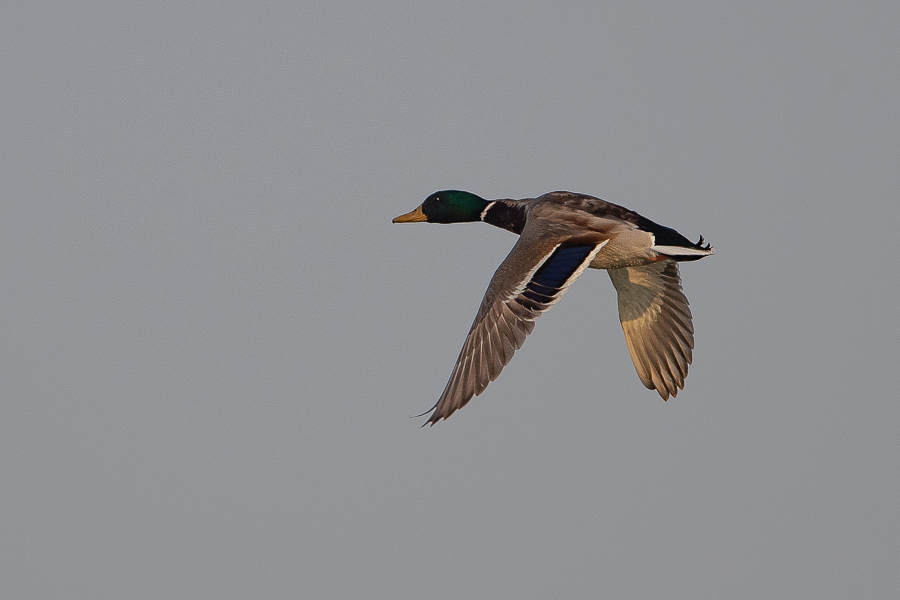
Mallard

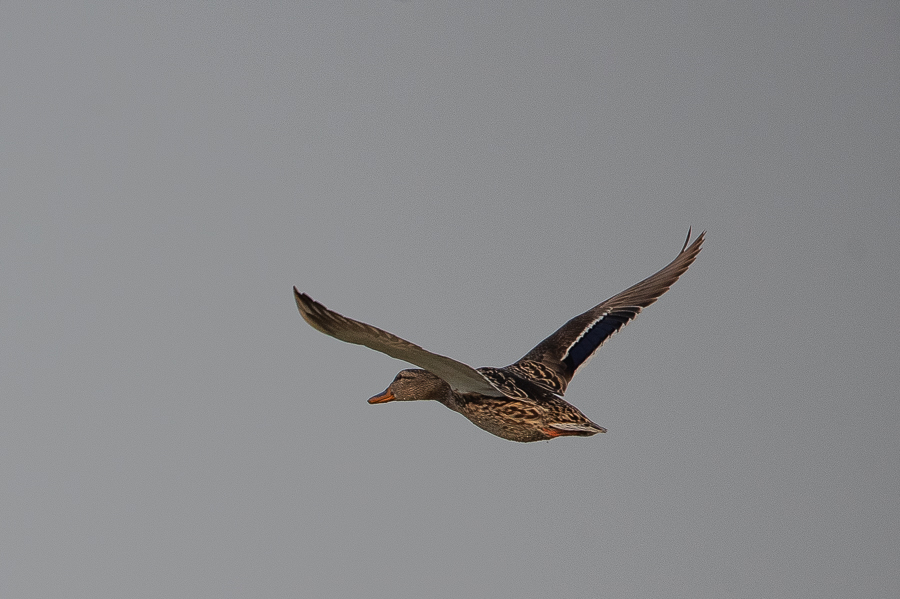
Mallard

Mallard

Mallard

Mallard

Mallard

Mallard

Mallard

Eurasian Teal

Eurasian Teal

Eurasian Teal

Eurasian Teal

Eurasian Teal


05 December 2019

Birding the Riyadh River – Al Hair

I went birding to the Riyadh River near Al Hair recently. It is an amazing site with running river, reed beds and nearby pivot irrigation fields. As I live four hours drive away from Riyadh, I have not been before, but this will certainly not be my last trip. On arrival at the site I saw a huge flock of over one hundred Black-crowned Night Herons, easily the largest number I have seen in Saudi Arabia. A Western Osprey was sitting in a tree and groups of Mallard and Pintail were flying around. There were six or more White-throated Kingfishers and plenty of Arabian Bee-eaters sitting around along with some Crested Larks. One pivot irrigation field held two European Rollers and plenty of Streaked Weavers, Arabian Golden Sparrows, Red Avadavat and Spanish Sparrows as well as a few Black Scrub Robin. The rocky areas nearby held Blackstart and Eastern Morning Wheatears. The Riyadh area is the closest place Arabian Bee-eater and Blackstart occur to the Eastern Province although both are common further west and south. The pools and rivers held large numbers of Grey Heron and a few Purple Heron and Common Moorhen were everywhere. 
Arabian Bee-eater
Arabian Bee-eater
Arabian Bee-eater
Arabian Bee-eater
Arabian Bee-eater
Arabian Bee-eater
Black-crowned Night Heron
Blackstart
Blackstart
Crested Lark
Crested Lark
Eastern Mourning Wheatear
European Roller
European Roller
Mallard
Mallard
Namaqua Dove
Namaqua Dove
Spanish Sparrow
Spanish Sparrow

17 January 2019

Mallard - Jubail

Whilst birding at Jubail 11 January and I found a group of eight Mallard Anas platyrhynchos, three males and five females in an area of flooded sabkha. In the Eastern Province they are an uncommon passage migrant and winter visitor that generally occurs from late August until May, with peak numbers from September to March. It occurs mainly in the coastal zone where they often frequent coastal areas and inland pools. The only regular sites are the Dammam area where birds are often seen in Tarout Bay and the Jubail area that regularly has small flocks of up to 35 birds in the winter. Inland records have come from Dhahran Saudi Aramco camp percolation pond and Abqaiq lagoons where birds are seen each winter in numbers up to 15 birds. The species is extremely weary in the Kingdom and getting close to birds is extremely difficult. The group of eight birds I saw were hidden behind a group of trees and the only half decent photo, shown below, was through the trees, As soon as I moved, the birds sensed my presence and flew off.
Mallard

14 February 2018

Winter Birding - Haradh

Phil Roberts and I went for our normal winter visit to Haradh. We saw a good number of winter visitors at the site including a large flock of 150 plus Kentish Plover feeding on the edge of a pivot irrigation field. We have seen the species here before but not in such a large flock. We always see good numbers of Desert and Isabelline Wheatears at this location and this visit was no different. An unusual sight was a Short-toed Snake Eagle, particularly as they are rare winter visitors, although more regular in the main migration season. Last year we saw a flock of over 60 Mallard in a spray field and had a similar sized flock in a similar location this year. Other birds seen included Tawny Pipit and Namaqua Dove.
Desert Wheatear
Desert Wheatear
Isabelline Wheatear
Isabelline Wheatear
Isabelline Wheatear
Isabelline Wheatear 
Kentish Plover
Kentish Plover
Mallard
Mallard
Namaqua Dove
Namaqua Dove
Short-toed Snake Eagle
Tawny Pipit
Tawny Pipit