Showing posts with label Abyssinian Roller. Show all posts

08 August 2022

Phil’s Fields - Sabya

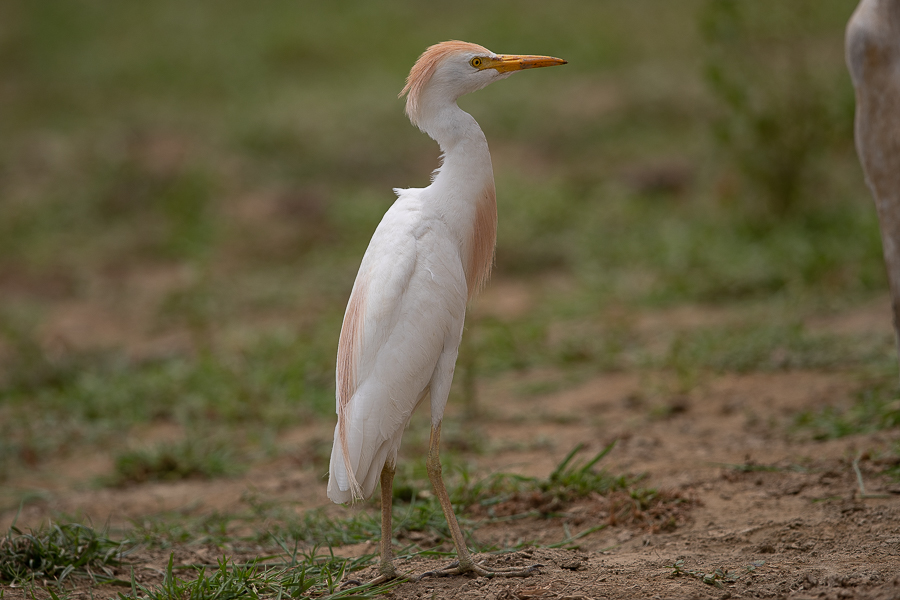
Whilst birding the Sabya area in the summer we saw the normal range of good birds. Birds you are almost guaranteed to see in the pivot fields either on the overhead wires or the pivot irrigation sprayers themselves are Abyssinian Roller. This species is common in the southwest but these fields are one of the best places to see the birds. The only issue is that it is difficult to get photos of them on anything like a natural perch. Other common species building nests and raising young in the fields are Ruppell’s Weaver. These also use the pivot irrigation structures to rest on but drop down to the fields to collect nesting material and food. Western Cattle Egret are very common and often follow behind the water spray to take a shower, keep cool and catch prey. Common Myna can also be seen almost anywhere but mainly in the fields and fields behind where they are common.

Ruppell's Weaver

Ruppell's Weaver

Western Cattle Egret

Western Cattle Egret

Western Cattle Egret

Western Cattle Egret

Western Cattle Egret

Western Cattle Egret

Western Cattle Egret

Western Cattle Egret

Common Myna

Abyssinian Roller

18 November 2020

Birding Malaki Dam Lake

We visited Malaki Dam Lake recently and saw quite a few Pied Cuckoo including adults and juveniles. This species is restricted to the southwest of the Kingdom where it is an uncommon summer visitor. Another summer visitor seen was White-throated Bee-eater, where again we saw both adults and juveniles. At the lake itself we located a few Pink-backed Pelican and plenty of Little Grebes as well as a Grey-headed Kingfisher and a calling Abyssinian Roller.
Abyssinian Roller
Abyssinian Roller
Grey-headed Kingfisher
Pied Cuckoo
Pied Cuckoo
Pied Cuckoo
Pied Cuckoo
Pink-backed Pelican
Pink-backed Pelican
Pink-backed Pelican
Pink-backed Pelican
White-throated Bee-eater

26 September 2019

Birding Malaki Dam Lake – Abu Arish

Whilst birding Malaki Dam Lake near Abu Arish Phil Roberts and I saw a few good birds. We were mainly there to try to see and record Nubian and Plain Nightjars during the night but also spent some daylight time looking for other birds. The lake is a huge expanse of water with semi cultivated fields nearby and other rough hillsides made of volcanic rock. The water areas are good for Eurasian Spoonbills and Glossy Ibis and the trees for doves where Red-eyed Dove has been seen previously. We failed to see any Red-eyed Doves but located plenty of similar African Collared Doves. The uncommon Abyssinian Roller was seen on some overhead wires and African Palm Swifts were flying over.
Eurasian Spoonbill
Eurasian Spoonbill
Glossy Ibis
Glossy Ibis 
Glossy Ibis
Glossy Ibis


African Collared Dove
African Collared Dove 
African Palm Swift
African Palm Swift
African Palm Swift
African Palm Swift
Malaki Dam Lake
Malaki Dam Lake

31 January 2018

Abyssinian Roller and Singing Bush Lark – Phil’s Fields

Whilst birding the southwest of the Kingdom this winter I went to Phil’s Fields which is a large pivot irrigation set up with three large fields. It is an excellent place to see good birds and I always see Singing Bush Lark and Zitting Cisticola there, and this visit was no exception. More unusual birds seen this trip included African Stonechat and Abyssinian Roller, both of which I have not recorded at the location and probably only occur in winter as this was my first winter visit to the site. Western Cattle Egret, Isabelline Wheatear, Green Bee-eater and Indian Silverbill were a few other more common species seen there. 
Abyssinian Roller
Abyssinian Roller
African Silverbill
African Silverbill
African Silverbill
African Silverbill
African Stonechat
African Stonechat
Green Bee-eater
Green Bee-eater
Singing Bush Lark
Singing Bush Lark
Singing Bush Lark
Singing Bush Lark
Isabelline Wheatear
Isabelline Wheatear

24 April 2017

King Jird near Tanoumah – Asir Mountains

Whilst birding the Tanoumah area in April 2017 I came across a King Jird Meriones rex. The animal was making a squeaking sound reminiscent of a bird, so I was looking in a small bush when Phil Roberts who was with me pointed out the Jird on the rocks below where I was looking. It ran along a row of rocks along the edge of a small cultivated field before disappearing into a hole and not reappearing. The King Jird occurs in the highlands of the southwestern Arabian Peninsula, from near Mecca in Saudi Arabia south to near Aden in Yemen. In Saudi Arabia the species has been reported from 1,350 to 2,200 metres above sea level. This jird occurs lives in large burrows amongst bushes, preferring raised areas bordering agricultural land. It is active in the evening and early morning. It lives in burrows which it shares with other rodents and lizards. They are reported as common throughout their range. Although  have seen the King Jird on a number of occasions this is the first time I have seen one properly and also the first time I have managed to get a photo of one. Normally they are seen briefly disappearing down their burrows.
King Jird Meriones rex

King Jird Meriones rex

22 April 2014

A low elevation record of Bruce’s Green Pigeon – Wadi Juwwah

Wadi Juwwah (16 56.75N, 43 01.80E) is alternatively written as Wadi Jawa or even Wadi Giwa and is a rare north-south wadi in south-west Saudi Arabia as most of the wadis are west-east. The wadi has one of the highest diversities of breeding species known in Arabia including Helmeted Guineafowl Numida meleagris although we did not see this species on this trip. It lies at an altitude of 100-300 metres in the foothills east of Abu Arish and south of al-Arida, inland from Jizan. It consists of a sandy and clay bed surrounded by often steep volcanic rocky slopes. Scattered Dobera and Ficus trees dominate the landscape and there are many remnant patches of Acacia and Salvadora scrub. The rocky outcrops and bordering slopes are only sparsely vegetated with Acacia and succulents but can have a surprising cover of grasses after heavy rain. The wadi is densely populated and most of it is cultivated with sorghum and millet. We bird-watched the area on 5 April and saw Abyssinian Rollers, Nile Valley Sunbirds, six Black Bush Robins, Ruppell’s Weavers, Arabian Babblers, Laughing Doves, Namaqua Doves, one Desert Lark and a Graceful Prinia. A pair of Gabar Goshawk was seen flying around for several minutes over the wadi and a few Green Bee-eaters, three Masked Shrikes and White-spectacled Bulbuls were also seen. The most interesting sighting was a Bruce’s Green Pigeon in a tree in the wadi which is below the general elevation levels recorded for the species of 500-2400 metres. I have previously regarded this species as a high elevation bird but this record clearly shows this assumption to be incorrect. They may move to lower elevations in the winter months like many other high elevation species.
Bruce's Green Pigeon
Abyssinian Roller

12 August 2013

Wadi Juwwah


Wadi Juwwah (16 56.75N, 43 01.80E) is alternatively written as Wadi Jawa or even Wadi Giwa and is a rare north-south wadi in south-west Saudi Arabia as most of the wadis are west-east. It took us a bit of time to find the site but it is easily located if you drive out of Abu Arish and continue on the road until the check point. Go through the check point for about two kilometres and then you will see a turn to the right onto a tarmac road, which goes to Wadi Juwwah and a dirt track to the left which goes to Malaki Lake. The wadi has one of the highest diversities of breeding species known in Arabia including Helmeted Guineafowl  Numida meleagris. This is the single most important site in Saudi Arabia for the species with over 1,000 breeding birds in 1990, which is due to the protection of the local Emir and people of the valley. We managed to see two of these birds feeding under a thick acacia tree belt. Wadi Jawwah lies at an altitude of 100-300 metres in the foothills east of Abu Arish and south of al-Arida, inland from Jizan. It consists of a sandy and clay bed surrounded by often steep volcanic rocky slopes. Scattered Dobera and Ficus trees dominate the landscape and there are many remnant patches of Acacia and Salvadora scrub. The rocky outcrops and bordering slopes are only sparsely vegetated with Acacia and succulents but can have a surprising cover of grasses after heavy rain. The wadi is densely populated and most of it is cultivated with sorghum and millet. The best way to bird the site is to walk down the wadis themselves or drive slowly along the road looking at all the interesting places you see. Walking is certainly the best way to go but in summer it is extremely hot and humid in this area. 
Abyssinian Roller
We bird-watched the area twice, once on 1 July, our first afternoon, after first looking at the Malaki Dam area and the second time on 3 July, two days later, when we arrived at the location at about ten o’clock again after having birded the Malaki Dam area. The first day in Wadi Juwwah we saw a superb Abyssinian Roller as well as an African Grey Hornbill, both new species for me in Saudi Arabia. Other interesting birds seen included two Nile Valley Sunbirds, six Black Bush Robins, Zitting Cisticola was heard only, 20+ Ruppell’s Weavers, two Arabian Babblers, 10+ Laughing Doves, 15+ Namaqua Doves, one Desert Lark, one Graceful Prinia and two Blackstarts. A number of White-throated Bee-eaters were present in the larger trees surrounding this site with one giving very good views along the side of a back road. 
White-throated Bee-eater
Nile Valley Sunbird
Black Bush Robin
On the 3 July we saw more birds than the previous visit and were concentrating on Helmeted Guineafowl. We found a single bird under some acacia trees and when a goat herder walked past and the bird was disturbed it was joined by a second bird. Both ran away up the basalt cliffs and disappeared from view and despite some searching could not be relocated. The best way to find the Guineafowls is to walk down the wadies and listen for calls, although the birds we saw were silent. A strange call from a large tree attracted out attention and after walking to the place where the sound was coming from a Gabar Goshawk flew out with a large snake held in its talons. A lucky stop at a large tree found a minimum of 13 Violet-backed Stralings present including a very young juvenile bird. Three Abyssinian Rollers were seen as well as five White-throated Bee-eaters, one Green Bee-eater and five White-spectacled Bulbuls. 
Helmeted Guineafowl
Violet-backed Starling - male