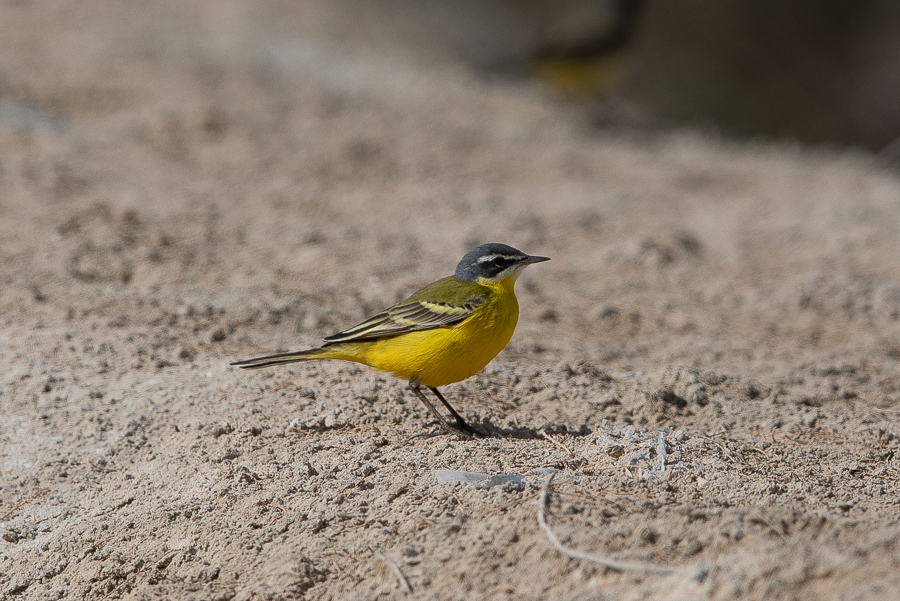
Showing posts with label Yellow Wagtail (flava). Show all posts

05 October 2024

Yellow Wagtails – Dhahran Football Fields

Whilst birding the Dhahran Hills Cricket and football Fields in mid-September I found several hundred Yellow Wagtails allowing close views and photos to be taken. They varied in plumage considerably and there was more than one sub-species present but the most common appeared to be flava. The Yellow Wagtail is a common passage migrant with various subspecies occurring, but they are much commoner in the spring than the autumn. Autumn numbers are still relatively high with tens of birds generally seen during the migration period from late August until late October. This is the first time I have seen this high a number of birds together hopefully indicating a good autumn to come. 


21 April 2024

More Yellow Wagtails – Dhahran Hills

Whilst birding the Dhahran Hills football fields in the spring the number and type of Yellow Wagtails has been very high. The main numbers were Sykes Yellow Wagtail Motacilla flava beema amongst them, which is an early migrant with March and April being the best months for seeing them. They are more often seen in spring than autumn. The other common Yellow Wagtail seen was Black-headed Wagtail feldegg which is part of the Yellow Wagtail complex a group of birds that are common spring and autumn passage migrants, sometimes in hundreds. Yellow Wagtails pass from mid-February to May and again from early August to mid-November with many races identifiable in the field including feldegg, melanogrisia, lutea, flava, thunbergi and bema. Sykes's Wagtail and Blue-headed Wagtail are sometimes difficult if not impossible to separate in the field.

Sykes Yellow Wagtail Motacilla flava beema

Sykes Yellow Wagtail Motacilla flava beema

Sykes Yellow Wagtail Motacilla flava beema

Sykes Yellow Wagtail Motacilla flava beema

Sykes Yellow Wagtail Motacilla flava beema

Sykes Yellow Wagtail Motacilla flava beema

Sykes Yellow Wagtail Motacilla flava beema

Yellow-headed Wagtail Motacilla flava lutea

Yellow-headed Wagtail Motacilla flava lutea

Black-headed Wagtail Motacilla flava feldegg

Black-headed Wagtail Motacilla flava feldegg

Black-headed Wagtail Motacilla flava feldegg

Blue-headed Wagtail Motacilla flava flava

Blue-headed Wagtail Motacilla flava flava

Blue-headed Wagtail Motacilla flava flava


09 April 2024

Various subspecies/types of Yellow Wagtail – Dhahran Hills

Whilst birding the Dhahran Hills football fields in the spring I came across a number of different subspecies/types of Yellow Wagtails. The main numbers were Sykes Yellow Wagtail Motacilla flava beema amongst them, which is an early migrant with March and April being the best months for seeing them. They are more often seen in spring then autumn. A single thunbergi, also known as Grey-headed Wagtail was seen. This subspecies occurs from Scandinavia eastwards to northwest Siberia and they winter mainly in sub-Saharan Africa and across South & southeast Asia. Yellow Wagtails are common in the Eastern Province throughout the spring with various subspecies passing but thunbergi appears to be one of the late passing subspecies with most records occurring in late April and May, so this bird was an early migrant. As always with wagtails they were difficult to get good photographs of as they are always moving and in areas with lots of vegetation. My best shots are shown below. The other common Yellow Wagtail seen was Black-headed Wagtail feldegg which along with melanogrisia are often the first subspecies to occur. They are then followed by bema, flava and thunbergi. The Black-headed Wagtail is part of the Yellow Wagtail complex a group of birds that are common spring and autumn passage migrants, sometimes in hundreds. Thy pass from mid-February to May and again from early August to mid-November with many races identifiable in the field including feldegg, melanogrisia, lutea, flava, thunbergi and bema. By April, flocks of more than a hundred birds are regularly recorded in cultivated areas. Sykes's Wagtail and Blue-headed Wagtail are sometimes difficult if not impossible to separate in the field.

Black-headed Wagtail - feldegg

Blue-headed Wagtail - flava

Sykes's Wagtail - beema

Grey-headed Wagtail - thumbergi

Sykes's Wagtail - beema

White Wagtail


19 October 2022

A few migrants - Aqua Park

Last weekend in Jubail, I saw a few migrants at Aqua Park. I arrived at first light and as the park was being watered spent the first hour looking at the birds on the grassy areas. Here I noted a few migrants like a couple of Spotted Flycatcher and three Tree Pipit with up to ten Yellow Wagtail. The park is neat to a water area and here there were a few waders such as Eurasian Whimbrel, Dunlin, Kentish Plover and Black-winged Stilts. Egrets were numerous with most birds being Indian Reef Herons and a few Slender-billed Gulls were also present. A single duck noted at some distance turned out to be a female Northern Pintail on closer inspection. The trees held a few birds with a Masked Shrike noted along with a Lesser Whitethroat and birds flying over included good numbers of both Barn Swallow and Sand Martin.

Northern Pintail

Spotted Flycatcher

Tree Pipit

Yellow Wagtail


Yellow Wagtail


23 September 2022

A few returning migrants – Jubail

As September started so did an increasing number of shrikes. The first species to arrive in the autumn are Turkestan Shrike closely followed by Duarian Shrike and then Woodchat Shrike. All were seen in small numbers. Yellow Wagtail numbers started to increase as well with plenty of scruffy looking individuals but also one or two in better plumage such as the one in the photo below. Sand Martins really increased in numbers with several hundred seen in early September mainly flying over but with the occasional bird perched in the reeds. Barn Swallow was also common but numbers remained much lower than Sand Martin. A single Wryneck was a nice sight, perched on the edge of a track by the reed beds. Although I see the species reasonably often it is difficult to get good photos of them. Migrants seen but not photographed included Black-eared Wheatear, Isabelline Wheatear and Blue-cheeked Bee-eaters. Squacco Heron is a migrant but they probably breed nearby so difficult to tell exactly how far they have moved. Numbers of this species are building up again after they departed for the summer months to breed elsewhere. Numbers of Grey Heron are also increasing after the lack of birds during the summer months.

Turkestan Shrike

Woodchat Shrike

Eurasian Wryneck

Yellow Wagtail

Sand Martin

Sand Martin

Grey Heron

Squacco Heron


18 April 2022

Black-headed & Flava Wagtails – Jubail

Whilst birding the Jubail area in mid-March I came across a good number of migrants including my first large numbers of Yellow Wagtails. Mid-February is the start of the spring passage for this species and Black-headed Wagtail feldegg and melanogrisia are often the first subspecies to occur with bema, flava and thunbergi following. The Black-headed Wagtail is part of the Yellow Wagtail complex a group of birds that are common spring and autumn passage migrants, sometimes in hundreds. Thy pass from mid-February to May and again from early August to mid-November with many races identifiable in the field including feldegg, melanogrisia, lutea, flava, thunbergi and bema. By March numbers start to build up and by April, flocks of more than a hundred birds are recorded, with over 150 scattered around the location on this visit. Some intergrades are also seen each spring which often prove difficult to identify.


08 March 2021

Black-headed & Flava Wagtails – Jubail

Whilst birding the Jubail area in late February I came across a good number of migrants including my first large numbers of Yellow Wagtails. Mid-February is the start of the spring passage for this species and Black-headed Wagtail feldegg and melanogrisia are often the first subspecies to occur with bema, flava and thunbergi following. The Black-headed Wagtail is part of the Yellow Wagtail complex a group of birds that are common spring and autumn passage migrants, sometimes in hundreds. Thy pass from mid-February to May and again from early August to mid-November with many races identifiable in the field including feldegg, melanogrisia, lutea, flava, thunbergi and bema. By April, flocks of more than a hundred birds are regularly recorded in cultivated areas. 


Black-Headed Wagtail

Melanogrisia Yellow Wagtail

Melanogrisia Yellow Wagtail

Flava Yellow Wagtail