Showing posts with label White-browed Coucal. Show all posts

20 August 2022

Abu Arish Waste Water Pools – Abu Arish

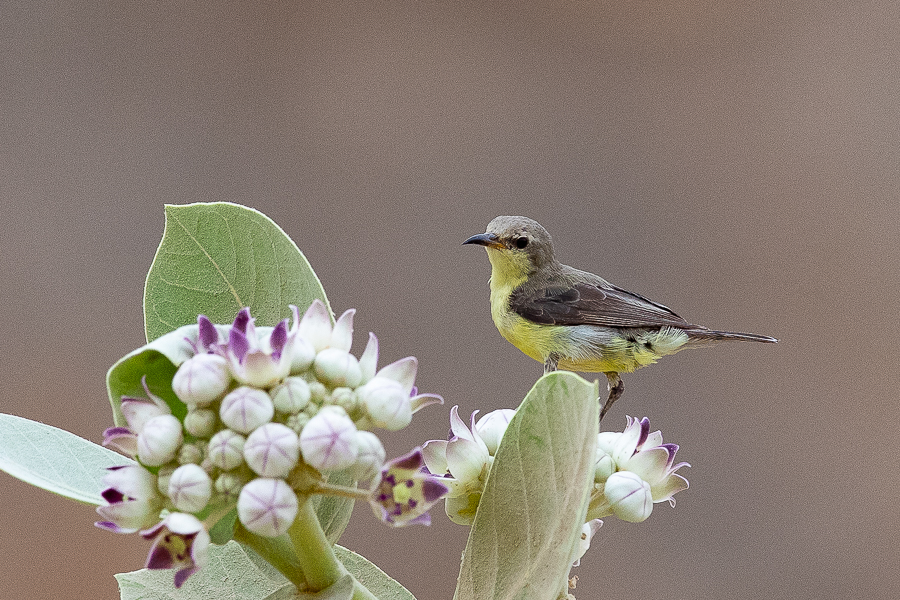
The Waste Water Pools at Abu Arish are good for birds due to the combination of water and shrubs. It is probably the best location in the Kingdom for getting good views of White-browed Coucal which can be seen best in the early morning when they sit on the top of trees and shrubs calling. Birds can be seen throughout the day but tend to disappear into cover as the temperature rises. Another species that is always seen at this location is Nile Valley Sunbird. Both males and females can be seen but they are not too easy to photograph as my average shot below shows. Another common species here is Namaqua Dove, which can be easily photographed at close range as they do not appear to be frightened of people. Water birds are less in number in the summer but we saw plenty of breeding plumage White-winged Terns as well as a few Glossy Ibis and Western Cattle Egret. Little Grebes are also very common on the water but not much else was seen.

White-browed Coucal

White-browed Coucal

White-browed Coucal

White-browed Coucal

White-browed Coucal

Nile Valley Sunbird

Namaqua Dove

Namaqua Dove

Glossy Ibis


19 September 2019

White-browed Coucal – Abu Arish Waste-water Lakes

Whilst birding the Abu Arish area recently I came across a good number of White-browed Coucal Centropus superciliosus including well grown juveniles. The subspecies of White-browed Coucal we get in southwest Saudi Arabia is Centropus superciliosus superciliosus. They occur on Socotra and southwest Arabia as well as eastern Sudan, Eritrea, Ethiopia and western Somalia south through Kenya and northeast Uganda to northeast Tanzania. In Saudi Arabia, they are an uncommon breeding resident in the Tihamah and have been recorded on the Farasan Islands. They are normally located by their distinct song/call that is a series of 10 – 20 notes, descending in pitch and increasing in tempo. They may call from deep inside vegetation but occasionally do so from an exposed perch. The best places to see the species in the Kingdom appear to be Malaki Dam Lake and the bottom of the Raydah Escarpment where they can be seen near the village and in the dry wadi at the bottom of the escarpment. This is a difficult species to photograph well as they spend much of the time hidden in vegetation.
White-browed Coucal

White-browed Coucal

White-browed Coucal

White-browed Coucal

White-browed Coucal

White-browed Coucal

White-browed Coucal

White-browed Coucal

White-browed Coucal

03 July 2018

White-browed Coucal – Raydah Escarpment

Whilst birding the bottom of the Raydah Escarpment in June 2018, I heard and saw a White-browed Coucal Centropus superciliosus. I eventually found the bird and after waiting some time, it came out into the open allowing some reasonable photographic opportunities. The subspecies of White-browed Coucal we get in southwest Saudi Arabia is Centropus superciliosus superciliosus. They occur on Socotra and southwest Arabia as well as eastern Sudan, Eritrea, Ethiopia and western Somalia south through Kenya and northeast Uganda to northeast Tanzania. In Saudi Arabia, they are an uncommon breeding resident in the Tihamah and have been recorded on the Farasan Islands. They are normally located by their distinct song/call that is a series of 10 – 20 notes, descending in pitch and increasing in tempo. They may call from deep inside vegetation but occasionally do so from an exposed perch. The best places to see the species in the Kingdom appear to be Malaki Dam Lake and the bottom of the Raydah Escarpment where they can be seen near the village and in the dry wadi at the bottom of the escarpment. This is a difficult species to photograph well as they spend much of the time hidden in vegetation.
White-browed Coucal - Centropus superciliosus

White-browed Coucal - Centropus superciliosus

White-browed Coucal - Centropus superciliosus

White-browed Coucal - Centropus superciliosus

03 March 2018

Raydah Escarpemnt - Abha

A winter visit to the bottom of the Raydah Escarpment early in the morning produced good views of a number of species. Arabian Babbler, Arabian Warbler and Shining Sunbird are common at most times of year here but Ruppell’s Weaver is less common. White-browed Coucal is seen with less frequency but are resident in small numbers in the valley. They are extremely difficult to photograph properly and the ones seen this trip were no exception. They are very good at disappearing into thick foliage or hiding in large trees making things difficult photography wise.
Arabian Babbler
Arabian Babbler
Arabian Babbler
Arabian Babbler
Arabian Babbler
Arabian Babbler


Ruppell's Weaver
Ruppell's Weaver
Shinning Sunbird
Shinning Sunbird 
Shinning Sunbird
Shinning Sunbird
White-browed Coucal
White-browed Coucal

02 August 2017

Some good birds – Sabya Waste Water Lagoons

I visited Sabya Waste Water Lagoons three times in July 2017 and saw a lot of good birds in the area. I explored further away from the lagoons and found good areas of Acacia scrub and a well vegetated wadi and a large rubbish dump that had started to be used in place of the original dump. The rubbish dump had Abdim’s Storks and hundreds of Arabian Golden Sparrows as well as some Ruppell’s Weavers. The wadi area had White-throated Bee-eaters and White-browed Coucal. The pools held Purple Heron, Grey Heron, Little Grebe, Glossy Ibis, Common Moorhens, Western Cattle Egrets, Greater Painted Snipe, Spur-winged Lapwings, Common Sandpiper, Black-tailed Godwit and Black-winged Stilts. The area around the pond had White-spectacled Bulbul, Black Scrub Robin, Black-crowned Sparrow-Lark, White-browed Coucal, Crested Lark and Green Bee-eaters. This site is an excellent birding location and one I visit every time I am in the area and it always turns up good birds.
African Collared Dove
African Collared Dove 
Arabian Babbler
Arabian Babbler
Arabian Golden Sparrow
Black-tailed Godwit
Black-tailed Godwit
Common Sandpiper
Common Sandpiper
Crested Lark
Crested Lark
Glossy Ibis
Glossy Ibis
Green Bee-eater
Green Bee-eater
Namaqua Dove
Namaqua Dove
Nile Valley Sunbird
Nile Valley Sunbird
Spur-winged Lapwing
Spur-winged Lapwing
Western Cattle Egret
White-browed Coucal
White-browed Coucal 
White-throated Bee-eater - juvenile

14 May 2017

African birds at the bottom of the Raydah Escarpment - Abha

Whilst birding the lower areas of the Raydah Escarpment in late March I saw a number of African species. Birds seen included African Grey Hornbill, Violet-backed Starling, Black-crowned Tchagra, Bruce’s Green Pigeon and White-browed Coucal. Bruce’s Green Pigeon is an interesting species as it only eats the fruit of a single type of fig tree. No White-throated Bee-eaters or Grey-headed Kingfishers were located so maybe we were too early for these birds to have arrived back from Africa. A few passerine migrants were also seen including a number of Common Blackcap. Resident species seen included Blackstart as well as Arabian Green Bee-eater and endemics recorded included the scarce Arabian Waxbill and the commoner Arabian Serin.
White-browed Coucal
White-browed Coucal
Bruce Green Pigeon
Bruce Green Pigeon
Bruce Green Pigeon
Bruce Green Pigeon
Bruce Green Pigeon
Bruce Green Pigeon
Bruce Green Pigeon
Bruce Green Pigeon
Common Chiffchaff
Common Chiffchaff
Tristrams Starling
Tristrams Starling 
Blackstart
Blackstart