Showing posts with label Harlequin Quail. Show all posts

31 July 2022

Harlequin Quail Dust Bathing – Phil’s Fields near Sabya

Due to our near miss on dust bathing Harlequin Quail we decided to go back the next day in the early morning to try our luck in the same place. This time we heard birds calling and stopped the car when a bird walked out of the crop field and onto the edge and sat close to the soft ground and vigorously wriggled its body and flapped its wings, sending loose dust and sand into the air. The bird spread a wing allowing the falling sand to fall between the feathers and reach the skin as well as remain in its back. It then started shaking its feathers and doing it over again. It is thought the likely purpose of dust bathing is the removal of parasites from the birds’ feathers. Some species of Quail have communal dust baths so presumably it is not uncommon for Quail but is the first time I have seen it occur, but I saw it twice in the two days we spent looking for the species in Sabya. After the bird finished dust bathing it walked off very close and it or another bird then started calling on a nearby earth mound and was so close we couldn't focus the cameras on it. We got full frame photos of the bird as it later walked past the car.




29 July 2022

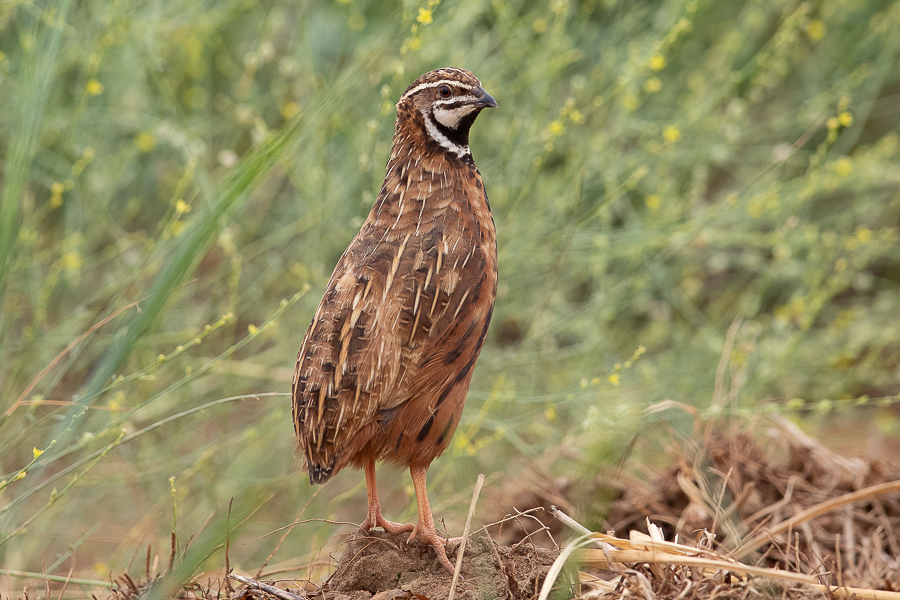
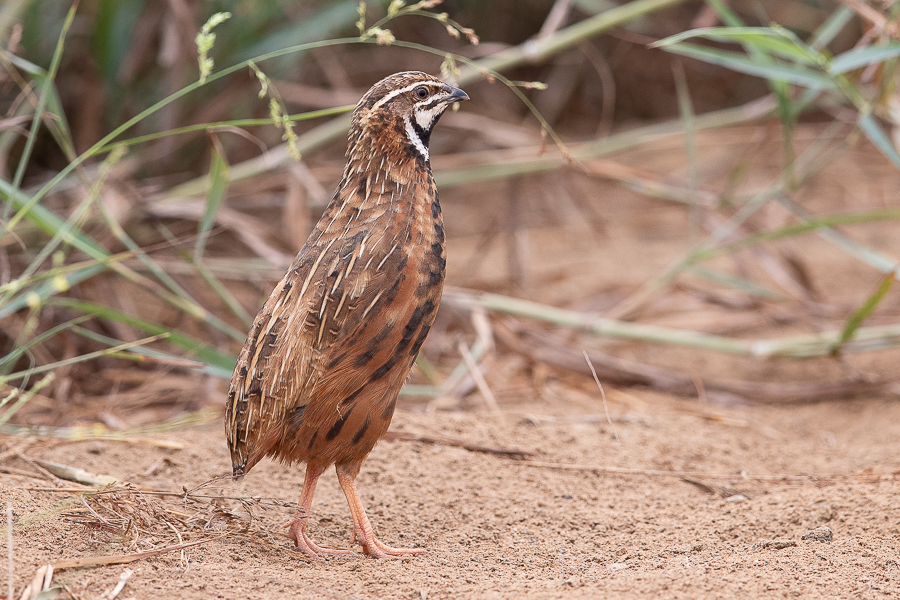
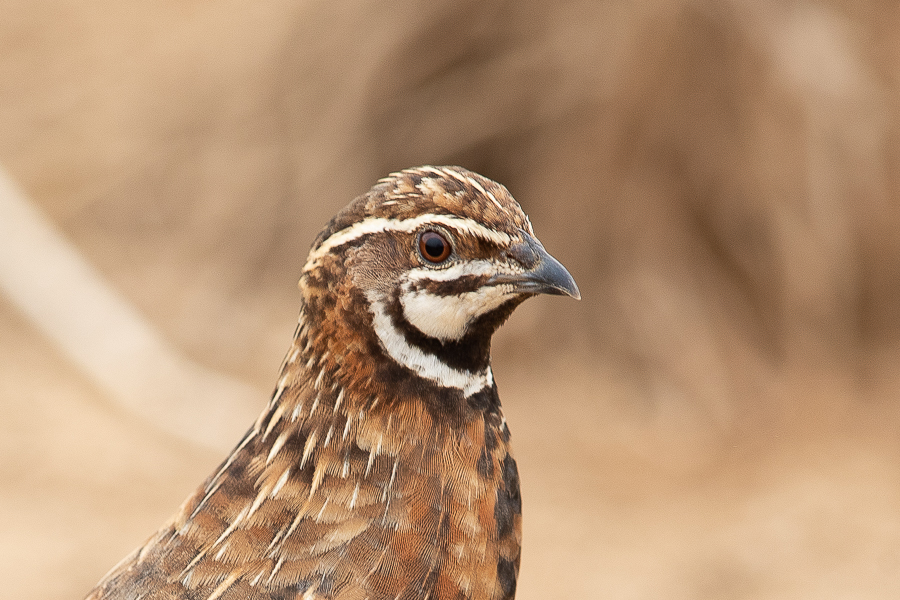
Harlequin Quail – Phil’s Fields near Sabya

Whilst birding the area around Sabya I saw at least ten Harlequin Quail Coturnix delegorguei with many other birds calling. We managed to get some good photos but later in the evening we saw two birds dust bathing on the edge of a track out in the open, but the dust from a recent sandstorm and high humidity made all the photos we took out of focus or very soft lacking detail. This species had not been recorded in Saudi Arabia for many years, until 2015. We saw a pair of birds at the edge of one of the fields at very close range, one of which was dust bathing, but the light was poor due to a recent dust storm and the high humidity made the photographs come out very poorly. We went back the next morning and managed to see another couple of birds again at close range and this time managed to get some very close photos of this difficult to see species. They would run quickly from one area of cover to another but luckily a bird stopped to sand bath and another male ran, stopped in the open and started to call from a small mound of earth. The male has a very distinctive head pattern being a combination of black-and-white, black breast and chestnut flanks with the female being similar to Common Quail although the size of the birds is slightly smaller. They favour open grassland with scattered bush cover and cultivated areas and have been recorded in all months in southwest Saudi Arabia. The subspecies that occurs in SW Saudi Arabia and Yemen is C. d. Arabica and is slightly paler than others. HBW says it is possibly not valid, as most records in its range considered probably migrants from Africa; further study needed”. This does not appear to be correct however as the birds are resident breeders in Saudi Arabia and not migrants and the colours look much paler both on the mantle and the rufous of the underparts.


09 September 2017

Harlequin Quail – Near Jizan

Whilst birding the area just north of Jizan on 7-8 July 2017 I saw at least six Harlequin Quail Coturnix delegorguei with many other birds calling. This species had not been recorded in Saudi Arabia for many years, until I found some in the same area in 2015. On the 6 July Phil Roberts and I flushed a male and female bird and got very good flight views as they flew a long distance across a field. We were there at around midday when it was very hot and no calling birds were heard. The next day we went back first thing in the morning to see if birds were calling and heard a minimum of ten calling birds out of which we managed to see six including five males and a female. They would run very quickly from one area of cover to another but luckily one male ran, stopped in a slightly open area, called a couple of times, and ran off again. This brief stop to call allowed me to get a couple of photographs of it that are shown below. As far as I am aware, these are the first photographs of the species ever taken in Saudi Arabia. This is even more important as the race that occurs in southwest Saudi Arabia is C. d. Arabica and only occurs in SW Saudi Arabia and Yemen and the records are outside the migration season for this species. This subspecies is slightly paler than other races but is thought by some to possibly not be a valid subspecies, although is recorded as one by the IOC and in the Handbook of Birds of the World (HBW). HBW states, however, “race arabica, only slightly paler than others, possibly not valid, as most records in its range considered probably migrants from Africa; further study needed”. The male has a very distinctive head pattern being a combination of black-and-white, black breast and chestnut flanks with the female being similar to Common Quail although the size of the birds is slightly smaller. They favour open grassland with scattered bush cover and cultivated areas and have apparently been recorded in all months in southwest Saudi Arabia, mainly in the late 1900’s, where they are assumed to be resident.
Harlequin Quail Coturnix delegorguei

Harlequin Quail Coturnix delegorguei

Harlequin Quail Coturnix delegorguei

18 July 2015

Harlequin Quail – Jizan area

Whilst birding the area just north of Jizan on 30 June 2015 I came across eight Harlequin Quail Coturnix delegorguei. This is a species that has not been recorded in Saudi Arabia for many years although I thought I saw one in 2013 in a nearby area. I flushed a male bird and got very good flight views as it flew a long distance across a field. The bright underparts plumage and face pattern could be clearly seen leaving no doubt this time about the birds identification. I them flushed seven more birds, one further male and six female types, but despite spending more than two hours walking the area and flushing birds I never managed to photograph one or see one on the ground for more than a few seconds. The race that occurs in southwest Saudi Arabia is C. t. arabica, that is slightly paler than other races but is possibly not a valid subspecies. Male has very distinctive combination of black-and-white head pattern, black breast and chestnut flanks with the female being similar to Common Quail. They favours open grassland with scattered bush cover and cultivated areas and have been recorded in all months in southwest Saudi Arabia where they are assumed to be a resident. This would be an interesting species to try to trap at a later date to confirm the breeding status and racial identification of the Saudi Arabian birds. I thank Kadambari Devaraian for kindly allowing me permission to use the photographs below of a male Harlequin Quail.