Showing posts with label Chestnut-bellied Sandgrouse. Show all posts

01 August 2024

Birding Sunbah Farms - Jizan

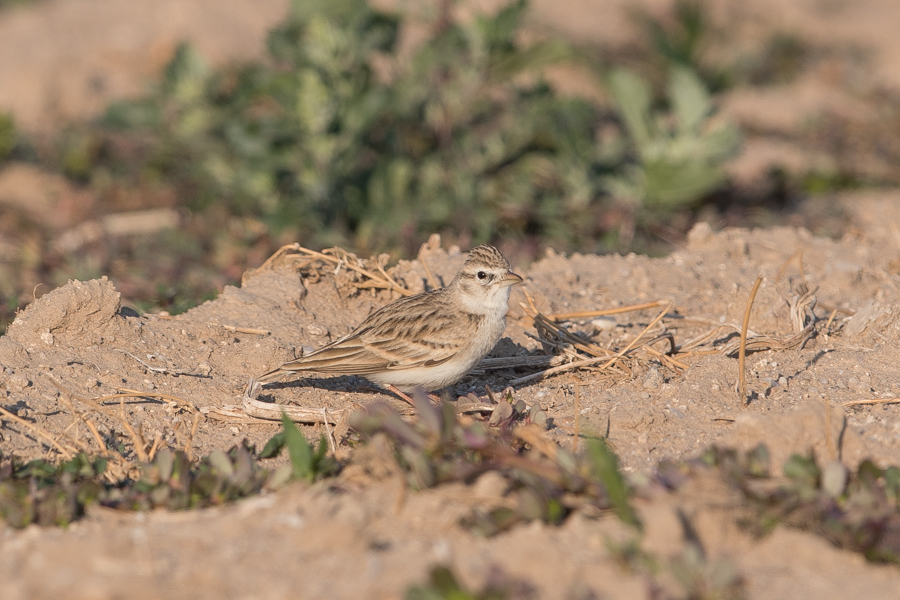
Whilst in the southwest of the Kingdom recently we visited Sunbah Farms, a large set of pivot irrigation fields that hold a lot of very good birds. We did nkt enter any of the fields as crops were growing but still saw a lot of good birds in the pivor irrigation tracks and surroundings. A pair of Chestnut-bellied Sandgrouse were seen near a small amount of water where one seemed to be wettings its breast feathers. Small numbers were also seen flying over at different places. Western Cattle Egret were very common with one very large flock of several hundred birds following behind a tractor cutting the crops where they could easily catch the disturbed insects. A few White-winged Tern were catching insects next to the pivot spray bars and Singing Bush Lark were common around the field edges and in song flight. A pair of Arabian Green Bee-eater were sitting nicely to photograph next to one field and two Black-winged Kite, were seen one of which was a juvenile. Several Barn Swallow were seen catching insects over the fields suggesting they are breeding in the area and Ruppell’s Weaver were common with a few nests found.

Arabian Bee-eater

Barn Swallow

Black-winged Kite - juvenile

Chestnut-bellied Sandgrouse

Chestnut-bellied Sandgrouse

Ruppell's Weaver

Singing Bush Lark

Singing Bush Lark

Western Cattle Egret

Western Cattle Egret

White-winged Tern

White-winged Tern


04 August 2022

Chestnut-bellied Sandgrouse – Phil’s Fields near Sabya

Whilst birding Phil’s Fields near Sabya in the late afternoon a female Chestnut-bellied Sandgrouse flew into one dry pivot field and settled relatively close to the car enabling the below photos to be taken. Chestnut-bellied Sandgrouse are a common and widespread breeding resident on the Tihamah and southern Red Sea coastlands, less common in the Northern Hejaz north to Rabigh with all records below 1000 metres. The species is, however, uncommon in Central Saudi Arabia and rare in the Eastern Province. They are a relatively small species, with elongated central tail feathers, dark underwing and white trailing edge to the primaries, blackish belly and unmarked head. The male has a narrow pectoral band and chestnut brown belly darkening towards rear, whereas the female is more mottled above and shows a tricoloured ventral pattern. Races differ mainly in tone of upperpart coloration with the Arabian population P. e. erlangeri sandy coloured. They typically inhabit bare semi-desert, often with scattered thorny scrubs or trees including Acacia. They feed during the cooler hours of morning and afternoon and drink 2–3 hours after sunrise, while in very hot weather some individuals drink again before sunset.


19 December 2021

Chestnut-bellied Sandgrouse – Haradh

Whilst birding the Haradh area on 27 November Phil Roberts and I came across three small flocks of Chestnut-bellied Sandgrouse totaling 78 birds. The birds appeared to be using the pivot irrigation fields but flew well before they were seen and at a great distance making photography very difficult. This is the third winter in a row we have seen the species in Haradh with this record being only the seventh record for the Eastern Province. They are a common and widespread breeding resident on the Tihamah and southern Red Sea coastlands, less common in the Northern Hejaz north to Rabigh with all records below 1000 metres. The species is, however, rare in Central Saudi Arabia and had not been recorded in the Eastern Province until 2013 when I was sent a photograph showing a number of birds (unfortunately) shot, apparently near Al Hassa in 2013. Phil Roberts then saw a single bird at Sabkhat Al Fasl in 2014 and Phil and I saw a single at the same location 12 February 2016. The other records being a flock of over 50 at Haradh on 25 January 2019, a single Al Asfar Lake, 20 September 2019 and a further flock of thirty birds flying over pivot irrigation fields at Haradh, 7 December 2019. They are a relatively small species, with elongated central tail feathers, dark underwing and white traing edge to the primaries, blackish belly and unmarked head. The male has a narrow pectoral band and chestnut brown belly darkening towards rear, whereas the female is more mottled above and shows a tricoloured ventral pattern. Races differ mainly in tone of upperpart coloration with the Arabian population P. e. erlangeri sandy coloured. They typically inhabit bare semi-desert, often with scattered thorny scrubs or trees including Acacia. They feed during the cooler hours of morning and afternoon and drink 2–3 hours after sunrise, while in very hot weather some individuals drink again before sunset.


12 February 2021

Some good birds in the pivot fields – Wadi Ad Dewasir

Wadi Ad Dewasir has several thousand pivot irrigation fields and is situated in central Saudi Arabia 1000 kilometes southwest of Dhahran. We spent three days birding the area in November and located some very interesting species. One species which had not been recorded there before but which we found in many places in small flocks totaling over 150 birds was Chestnut-bellied Sandgrouse. A local farmer I asked about the birds suggested they were common in the area, and this proved to be correct from our observations. Other species that were common were Cream-coloured Courser with over 50 seen each day and in one field a very large winter gathering of Caspian Plover totaling 36 birds. This is the largest winter group for many years in the Kingdom although hundreds were recorded in the Eastern Province in the 1980’s. Greater Hoopoe Lark was found feeding around the edge of several pivot fields with Great Grey Shrike (aucheri) seen occasionally perched in trees, shrubs or on hay bales. Commoner birds included House Sparrow, Indian Silverbill, Crested Lark, Yellow Wagtail, Arabian Green Bee-eater and Western Marsh Harrier. Lastly, at last two Pharaoh Eagle Owls were noted on the escarpment edge.

Arabian Green Bee-eater

Caspian Plover


Caspian Plover

Chestnut-bellied Sandgrouse

Chestnut-bellied Sandgrouse

Cream-coloured Courser

Cream-coloured Courser

Crested Lark

Crested Lark

Great Grey Shrike

Great Grey Shrike

Greater Hoopoe-Lark

Greater Hoopoe-Lark

Greater Hoopoe-Lark

Yellow Wagtail

Yellow Wagtail


11 February 2020

Winter birding – Haradh

Haradh is an excellent site with many pivot irrigation fields that attract a lot of wintering birds. We visited recently and were quite disappointed to find many of the pivots have stopped being used to grow crops. This is probably as a result of the Kingdoms requirement for farmers to stop growing fodder crops from November 2018 to save precious underground water supplies. The fields were mainly there to feed the large herds of cows owned by NADEC and they have probably stopped growing the crop. There were a few fields with what looked like potatoes growing that had a few birds but numbers were significantly down on previous years due to lack of irrigated fields. We did manage to see a few good birds such as a male and female Pallid Harrier, good numbers of both Greater Short-toed Lark and Lesser Short-toed Lark and hundreds of White Wagtail. Several Desert Wheatear were also scattered around the fields. One field with crops held a flock of over thirty Northern Lapwings but nothing else of note could be seen with them. A flock of thirty Chestnut-bellied Sandgrouse flew over at one point only the fifth record for the Eastern Province but the second in two years from Haradh. A Greater Hoopoe Lark gave good views as did a few Spanish Sparrows.
Desert Wheatear
Desert Wheatear
Chestnut-bellied Sandgrouse
Greater Hoopoe Lark
Greater Hoopoe Lark
Greater Hoopoe Lark
Greater Hoopoe Lark
Greater Hoopoe Lark
Greater Hoopoe Lark
Greater Short-toed Lark
Lesser Short-toed Lark
Northern Lapwing
Northern Lapwing
Northern Lapwing
Northern Lapwing
Pallid Harrier
Pallid Harrier
Spanish Sparrow
Spanish Sparrow

06 September 2019

Chestnut-bellied Sandgrouse – Abu Arish

Whilst birding the Abu Arish area in July I came across a few small groups of Chestnut-bellied Sandgrouse Pterocles exustus. The largest flock was 15 birds. The species is a common breeding resident on the Tihama and southern Red Sea coastlands, less common in the Northern Hejaz north to Rabigh with all records below 1000 metres. They are a relatively small species, with elongated central tail feathers, dark underwing, blackish belly and unmarked head. The male has a narrow pectoral band and chestnut brown belly darkening towards rear, whereas the female is more mottled above and shows a tricoloured ventral pattern. Races differ mainly in tone of upperpart coloration with the Arabian population P. e. erlangeri sandy coloured. They typically inhabit bare semi-desert, often with scattered thorny scrubs or trees including Acacia. They feed during the cooler hours of morning and afternoon and drink 2–3 hours after sunrise, while in very hot weather some individuals drink again before sunset.
Chestnut-bellied Sandgrouse

Chestnut-bellied Sandgrouse

Chestnut-bellied Sandgrouse

Chestnut-bellied Sandgrouse

Chestnut-bellied Sandgrouse

Chestnut-bellied Sandgrouse

Chestnut-bellied Sandgrouse

Chestnut-bellied Sandgrouse

Chestnut-bellied Sandgrouse

Chestnut-bellied Sandgrouse

Chestnut-bellied Sandgrouse