Showing posts with label Yellow Wagtail (supersiliaris). Show all posts

31 March 2024

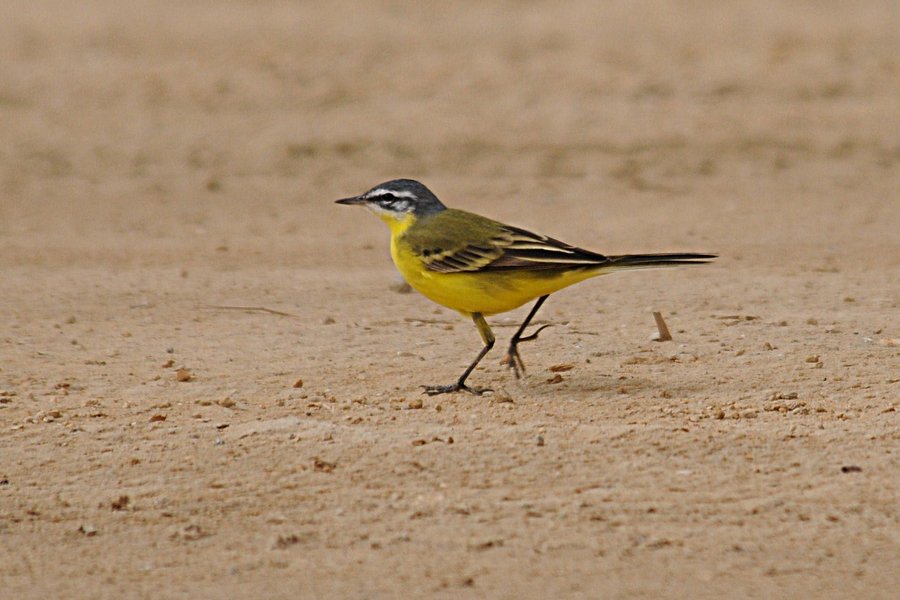
‘Superciliaris’ type Yellow Wagtail – Dhahran Hills

Whilst birding the Dhahran Hills football fields I came across a large group of wagtails including many types of Yellow Wagtails & a White Wagtail. In amongst the Yellow Wagtails, I saw a ‘superciliaris’ type bird. I managed to get a few distant photos but came back after work in the evening and got some much closer photos. Yellow Wagtail Motacilla flava supeciliaris are an intergrade between feldegg (Black-headed Wagtail) and lutea (Yellow-headed Wagtail), flava (Blue-headed Wagtail) or beema (Sykes’s Wagtail). They resemble feldegg except for having a conspicuous pale supercilium and pale eye-ring, although the eye-ring is not always present. The supercilium also varies in colour from yellow to white with birds with white supercilium called ‘superciliaris’ and those with yellow ‘xanthophrys’. They are reported to be a rather frequent intergrade.


20 April 2018

Wheatears and late winter visitors - Jubail


Birding the Jubail area continued turning up migrants and winter visitors with plenty of Great Cormorants staying in the area later this year than previously. They used to be seen rarely in the area but have now started winter in large numbers. Wheatears have been common with Pied Wheatears the commonest although a few Eastern Black-eared Wheatears of both forms seen. Waders are passing through with good numbers of both Little Ringed and Common Ringed Plovers, as well as the occasional Temminck’s Stint and Greater Sand Plover. Small numbers of both Common Swift and Pallid Swift have been passing through along with Barn Swallow and Blue-cheeked Bee-eaters. Many full breeding plumage Squacco Herons are around and several small flocks of various subspecies of Yellow Wagtails have been located with one supercilliaris amongst them.
Eastern Black-eared Wheatear
Caspian Tern
Caspian Tern
Eurasian Hoopoe
Eurasian Hoopoe
Great Cormorant
Great Cormorant
Great Cormorant
Great Cormorant
Little Ringed Plover
Pallid Swift
Pallid Swift
Pied Wheatear
Pied Wheatear
Pied Wheatear
Pied Wheatear
Squacco Heron
Squacco Heron
Temminck's Stint
Temminck's Stint 
Yellow Wagtail - supercilliaris
  

26 August 2017

Various subspecies/types of Yellow Wagtail - Jubail

Whilst birding the Jubail area in the spring I came across a number of different subspecies/types of Yellow Wagtails. These included birds showing characteristics of dombrowskii which is an intergrade between feldegg (Black-headed Wagtail) and flava (Blue-headed Wagtail) and supeciliaris which is an intergrade between feldegg (Black-headed Wagtail) and lutea (Yellow-headed Wagtail), flava (Blue-headed Wagtail) or beema (Sykes’s Wagtail). Both 'superciliaris' and 'dombrowskii' can be seen on spring migration in the Middle East and most authors agree that 'superciliaris', 'xanthophrys' and 'dombrowskii' are intergrades, as no area is known in which the majority of the population match any of these forms, and the majority of breeding records of 'superciliaris' and 'dombrowskii' come from the wide zone of intergradation between feldegg and flava. Intergrades between feldegg and flava are highly variable in the colour of the crown, and many birds are intermediate and difficult to place in either 'superciliaris' or 'dombrowskii'. Also thunbergi or Grey-headed Wagtail which occurs from Scandinavia eastwards to northwest Siberia and winters mainly in sub-Saharan Africa and across S & SE Asia. M. f. flava or Blue-headed Wagtail which occurs from northern and central Europe east to the Urals and winters in sub-Saharan Africa. M. f. melanogrisea or Eastern Black-headed Wagtail which occurs from the Volga Delta and southwest Kazakhstan south to northeast Iran and Afghanistan and winters mainly in south Asia eastwards to western Nepal and possibly also northeast Africa.
dombrowskii type
dombrowskii type
supercilliaris type
supercilliaris type
thunbergi
thunbergi
thunbergi
melanogrisea
flava

02 April 2017

‘Superciliaris’ type Yellow Wagtail - Jubail

Whilst birding the Jubail area I came across a large group of wagtails including Yellow Wagtails, White Wagtails and Citrine Wagtails. In amongst the mainly Black-headed Yellow Wagtails I saw briefly a superciliaris type bird. I managed to get a single photo of it before it flew off and could see it had many features of the intergrade but the head was less dark than the only other bird I have seen of this type. Yellow Wagtail Motacilla flava supeciliaris are an intergrade between feldegg (Black-headed Wagtail) and lutea (Yellow-headed Wagtail), flava (Blue-headed Wagtail) or beema (Sykes’s Wagtail). They resemble feldegg except for having a conspicuous pale supercilium and pale eye-ring, although the eye-ring is not always present. The supercilium also varies in colour from yellow to white with birds with white supercilium called ‘superciliaris’ and those with yellow ‘xanthophrys’. They are reported to be a rather frequent intergrade.

29 March 2012

Various Yellow Wagtail Sub-species - Sabkhat Al Fasl

Whilst birding at Sabkhat Al Fasl I came across a large group of White and Yellow Wagtails. At first light there were about 30 White Wagtails and 20 Yellow Wagtails but as I spent a hour or so looking at them all tying to work out what Sub-species were involved the numbers built up to about 40 White Wagtails and 60 Yellow Wagtails. Most birds were adults in full breeding plumage and they were actively feeding on small insects on the ground and were busy running around most of the time. The majority of birds were Black-headed Wagtails of the race Motacilla flava feldegg which are the most southerly breeding birds seen in Saudi Arabia breeding from the Balkan countries, through Turkey to eastern Kazakhstan. There were at least 20 males in the group.
 Black-headed Wagtail (Motacilla flava feldegg)
Black-headed Wagtail (Motacilla flava feldegg)

The next most common birds were Sykes's Wagtail Motacilla flava beema, from the northern Kirghiz steppes, which numbered only four males of which three of them are shown in the photographs below.
Finally there was a single male Motacilla flava superciliaris from south-east Russia which is a hybrid between Black-headed Wagtail (feldegg) and Sykes's Wagtail (beema) or Blue-headed Wagtail (flava). These birds are the least common Yellow Wagtails along with Yellow-headed Wagtail (lutea) in the Eastern Province of Saudi Arabia.

 Sykes's Yellow Wagtail (Motacilla flava beema)
 Sykes's Yellow Wagtail (Motacilla flava beema)
Sykes's Yellow Wagtail (Motacilla flava beema)

 Superciliosus Yellow Wagtail (Motacilla flava feldegg x beema)

A number of females were present but it is difficult to assign race to these birds but here is a photograph of two of them to compare with the brighter coloured males. The first female is probably a female Black-headed Wagtail (feldegg) but the other female is much more difficult to assign to race.
 Black-headed Yellow Wagtail (Motacilla flava feldegg) - female
Flava Yellow Wagtail - female


As mentioned White Wagtails were present in good numbers with wintering bids moving off and newly arrived spring migrants passing through. The final species of wagtail seen was Grey Wagtail with three different birds seen at various places on the site. These are a passage migrant through Jubail and there have been good numbers this spring compared to last year.
 White Wagtail
 Grey Wagtail
Grey Wagtail