Showing posts with label Nile Valley Sunbird. Show all posts

20 August 2022

Abu Arish Waste Water Pools – Abu Arish

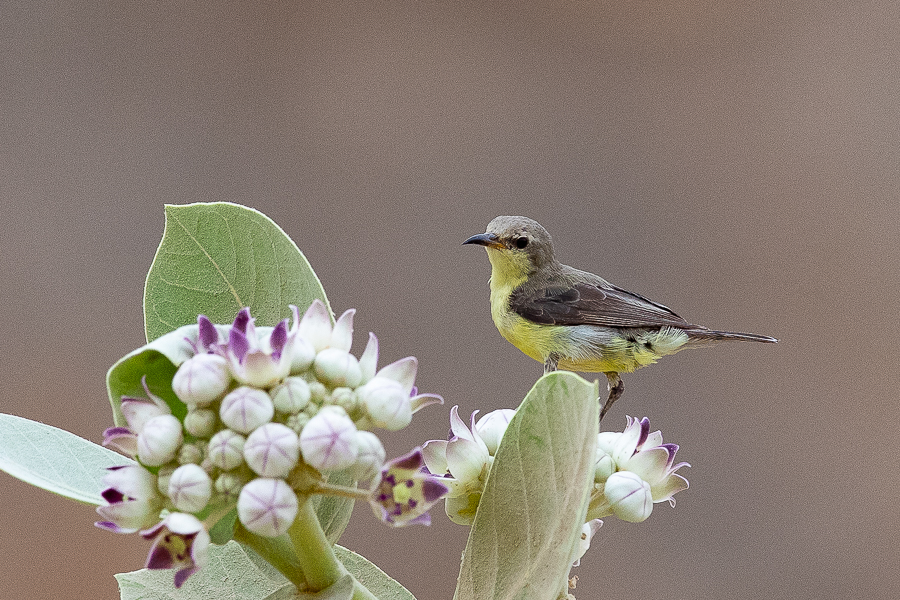
The Waste Water Pools at Abu Arish are good for birds due to the combination of water and shrubs. It is probably the best location in the Kingdom for getting good views of White-browed Coucal which can be seen best in the early morning when they sit on the top of trees and shrubs calling. Birds can be seen throughout the day but tend to disappear into cover as the temperature rises. Another species that is always seen at this location is Nile Valley Sunbird. Both males and females can be seen but they are not too easy to photograph as my average shot below shows. Another common species here is Namaqua Dove, which can be easily photographed at close range as they do not appear to be frightened of people. Water birds are less in number in the summer but we saw plenty of breeding plumage White-winged Terns as well as a few Glossy Ibis and Western Cattle Egret. Little Grebes are also very common on the water but not much else was seen.

White-browed Coucal

White-browed Coucal

White-browed Coucal

White-browed Coucal

White-browed Coucal

Nile Valley Sunbird

Namaqua Dove

Namaqua Dove

Glossy Ibis


02 August 2017

Some good birds – Sabya Waste Water Lagoons

I visited Sabya Waste Water Lagoons three times in July 2017 and saw a lot of good birds in the area. I explored further away from the lagoons and found good areas of Acacia scrub and a well vegetated wadi and a large rubbish dump that had started to be used in place of the original dump. The rubbish dump had Abdim’s Storks and hundreds of Arabian Golden Sparrows as well as some Ruppell’s Weavers. The wadi area had White-throated Bee-eaters and White-browed Coucal. The pools held Purple Heron, Grey Heron, Little Grebe, Glossy Ibis, Common Moorhens, Western Cattle Egrets, Greater Painted Snipe, Spur-winged Lapwings, Common Sandpiper, Black-tailed Godwit and Black-winged Stilts. The area around the pond had White-spectacled Bulbul, Black Scrub Robin, Black-crowned Sparrow-Lark, White-browed Coucal, Crested Lark and Green Bee-eaters. This site is an excellent birding location and one I visit every time I am in the area and it always turns up good birds.
African Collared Dove
African Collared Dove 
Arabian Babbler
Arabian Babbler
Arabian Golden Sparrow
Black-tailed Godwit
Black-tailed Godwit
Common Sandpiper
Common Sandpiper
Crested Lark
Crested Lark
Glossy Ibis
Glossy Ibis
Green Bee-eater
Green Bee-eater
Namaqua Dove
Namaqua Dove
Nile Valley Sunbird
Nile Valley Sunbird
Spur-winged Lapwing
Spur-winged Lapwing
Western Cattle Egret
White-browed Coucal
White-browed Coucal 
White-throated Bee-eater - juvenile

08 November 2016

Migrants and residents in Jeddah – Abdulraouf Banaja

I received a few e-mails and photos from Abdulraouf Banaja who has just started developing an interest in bird watching. He lives in Jeddah and was happy to have access to my website and was really surprised to see the varieties of birds that occur in the kingdom.  He mentioned It is definitely going to make his new hobby much more exciting than he thought first. It is great news more and more local people are getting interested in birds with Abdulraouf being one of many. He has seen a number of common migrnats such as Common Whitethroat and Blue-cheeked Bee-eater as well as some residents such as Nile Valley Sunbird and (Arabian) Green Bee-eater. I thank Abdulraouf for allowing me to use some of his photos on my website that are shown below.
Blue-cheeked Bee-eater
Blue-cheeked Bee-eater 
Arabian Green Bee-eater
Nile Valley Sunbird
Nile Valley Sunbird

27 July 2015

Wadi Thee Ghazal

Whilst in Taif Phil and I went to Wadi Thee Gazal. We were going to spend longer there but got delayed by the good birding at Wadi Waj. We thus arrived at about midday the worst time to arrive as the temperature rises quite high here even though it is in the mountains. Wadi Thee Gazal has excellent cover and good birds are regularly seen here. We saw only a few decent species but these included both Shining and Nile Valley Sunbirds as well as Arabian Warblers and Yemen Thrushes. Quite a number of Arabian Wheatears and Black Bush Robins were about and a few Namaqua Doves were flying around. This was another locality where we saw good numbers of Arabian Serins and they could often be located by their loud contact calls.
Black Bush Robin
Black Bush Robin
Namaqua Dove
Namaqua Dove
Nile Valley Sunbird
Nile Valley Sunbird
Shining Sunbird
Shining Sunbird

23 July 2015

Arabian Waxbill & Arabian Serin - Wadi Waj

Phil and I were taken to Wadi Waj, a site near the center of Taif, by a local birder Ali. He very kindly showed us the site and drove us around it in his four-wheel drive car, as our hire car could not make it. This site is a wastewater runoff stream that permanently flows and has good growth of reeds and sedges nearby. It is a place where Ali regularly sees Arabian Waxbill and Arabian Serin, two species that Phil and I were still trying to get decent photographs of. We saw the Waxbills almost as soon as we arrived but they were high in the tall trees and only average photos were obtained. We later saw them again when returned in the evening but again high in the trees. We did, however, get good views of Arabian Serin on several occasions. There were plenty of other birds about including Nile Valley Sunbirds, Graceful Prinias, Black Scrub Robins and plenty of Green Bee-eaters. An unusual bird seen almost immediately on arrival was a Scaly-breasted Munia, a species that Ali had not seen here before, but this may have been an escape from somewhere? A few wetland birds were seen as well including three Squacco Herons and a Green Sandpiper. On our return visit and as it was getting sark we located a Bruce’s Green Pigeon in a tall tree rounding off a good selection of birds at a good local site.
Arabian Serin
Arabian Serin
Arabian Serin
Arabian Serin
Arabian Waxbill
Arabian Waxbill
Bruce's Green Pigeon
Graceful Prinia
Graceful Prinia
Nile Valley Sunbird
Nile Valley Sunbird
Scaly-breasted Munia
Squacco Heron
Squacco Heron

23 April 2014

Looking for nightjars and sandgrouse – Abu Arish waste water treatment Ponds

We spent the late afternoon of 5 April until after dusk birding the Waste Water Treatment Ponds with the best area the bushy hinterland and basalt plain area near the last and cleanest lake and the small stream runoff areas. There is extensive vegetation in these areas and many bird species can be found. There is, however, a significant issue with this location now and that is it is being destroyed by a quarrying operation with much of the surrounding area already destroyed and large amounts of dust from the operation covering much of the vegetation. The pools still remain and had three Northern Shoveller, two Eurasian Teal, 30+ Glossy Ibis, 100+ Western Cattle Egret and five Squacco Herons. Waders included 20+ Black-winged Stilts, one Common Sandpiper and one Green Sandpiper with other water birds being 10+ Whiskered Terns, Temminck’s Stint, Little Stint, Common Greenshank. The vegetated areas had White-browed Coucal, 15+ Ruppell’s Weaver, ten Arabian Babblers, three White-spectacled Bulbuls, Barred Warbler, several Nile Valley Sunbirds and three Black Bush Robins. Whilst searching the tall vegetation we flushed several sandgrouse that appeared to be Lichtenstein’s Sandgrouse but they disappeared before positive identification could be made. This was a pleasant surprise as the area does nt very suitable for the species now the quarrying is in full swing. We stayed at the site until dusk looking for Nubian Nightjar and as soon as dusk approached we had a single Nubian Nightjar by the side of the road. As it got dark, a number (six?) of Nubian Nightjars started calling and over the next hour or so we managed to spotlight another five birds either on the road, the basalt hillside or under vegetation near the road.
Glossy Ibis
Nile Valley Sunbird
Nile Valley Sunbird

12 August 2013

Wadi Juwwah


Wadi Juwwah (16 56.75N, 43 01.80E) is alternatively written as Wadi Jawa or even Wadi Giwa and is a rare north-south wadi in south-west Saudi Arabia as most of the wadis are west-east. It took us a bit of time to find the site but it is easily located if you drive out of Abu Arish and continue on the road until the check point. Go through the check point for about two kilometres and then you will see a turn to the right onto a tarmac road, which goes to Wadi Juwwah and a dirt track to the left which goes to Malaki Lake. The wadi has one of the highest diversities of breeding species known in Arabia including Helmeted Guineafowl  Numida meleagris. This is the single most important site in Saudi Arabia for the species with over 1,000 breeding birds in 1990, which is due to the protection of the local Emir and people of the valley. We managed to see two of these birds feeding under a thick acacia tree belt. Wadi Jawwah lies at an altitude of 100-300 metres in the foothills east of Abu Arish and south of al-Arida, inland from Jizan. It consists of a sandy and clay bed surrounded by often steep volcanic rocky slopes. Scattered Dobera and Ficus trees dominate the landscape and there are many remnant patches of Acacia and Salvadora scrub. The rocky outcrops and bordering slopes are only sparsely vegetated with Acacia and succulents but can have a surprising cover of grasses after heavy rain. The wadi is densely populated and most of it is cultivated with sorghum and millet. The best way to bird the site is to walk down the wadis themselves or drive slowly along the road looking at all the interesting places you see. Walking is certainly the best way to go but in summer it is extremely hot and humid in this area. 
Abyssinian Roller
We bird-watched the area twice, once on 1 July, our first afternoon, after first looking at the Malaki Dam area and the second time on 3 July, two days later, when we arrived at the location at about ten o’clock again after having birded the Malaki Dam area. The first day in Wadi Juwwah we saw a superb Abyssinian Roller as well as an African Grey Hornbill, both new species for me in Saudi Arabia. Other interesting birds seen included two Nile Valley Sunbirds, six Black Bush Robins, Zitting Cisticola was heard only, 20+ Ruppell’s Weavers, two Arabian Babblers, 10+ Laughing Doves, 15+ Namaqua Doves, one Desert Lark, one Graceful Prinia and two Blackstarts. A number of White-throated Bee-eaters were present in the larger trees surrounding this site with one giving very good views along the side of a back road. 
White-throated Bee-eater
Nile Valley Sunbird
Black Bush Robin
On the 3 July we saw more birds than the previous visit and were concentrating on Helmeted Guineafowl. We found a single bird under some acacia trees and when a goat herder walked past and the bird was disturbed it was joined by a second bird. Both ran away up the basalt cliffs and disappeared from view and despite some searching could not be relocated. The best way to find the Guineafowls is to walk down the wadies and listen for calls, although the birds we saw were silent. A strange call from a large tree attracted out attention and after walking to the place where the sound was coming from a Gabar Goshawk flew out with a large snake held in its talons. A lucky stop at a large tree found a minimum of 13 Violet-backed Stralings present including a very young juvenile bird. Three Abyssinian Rollers were seen as well as five White-throated Bee-eaters, one Green Bee-eater and five White-spectacled Bulbuls. 
Helmeted Guineafowl
Violet-backed Starling - male